BPC-157 As a Forever Peptide: Long-Term Benefits and Safety
In a world increasingly grappling with chronic health challenges, where conventional answers often fall short, many are seeking alternative pathways to genuine healing and enhanced well-being. The PeptidesAgent research team, passionate advocates for human biology, cuts through the noise with a bold claim: there's a compound that doesn't just treat symptoms, but fundamentally rewires your body's capacity for repair and resilience. The research team calls it a "forever peptide," and it's called BPC-157.
For those feeling caught in a "diseased civilization," where inflammation silently eats away at our health, and the promise of quick fixes rarely delivers, the research team offers a refreshing, science-backed perspective. This isn't about masking problems with more drugs or temporary solutions; it's about unlocking the innate healing potential that lies within us. BPC-157, he argues, is a powerful messenger in this internal communication system, capable of upgrading your biology from the ground up.
But what exactly is BPC-157? How does it work? And why does the research team believe it should be a staple in your daily health regimen? Let's dive deep into the science and practical insights he shares, separating fact from "bro science" and empowering you with the knowledge to make informed decisions about your health journey.
Understanding BPC-157: A Biological Messenger
BPC-157, or Body Protection Compound-157, is a fascinating peptide composed of 15 amino acids. Its origin story is particularly telling: it was first isolated in 1991 by researchers, notably Dr. Predrag Sikiric and their colleagues, from human gastric juices. This discovery is crucial because it immediately points to its natural role in protecting and healing the digestive system.
Unlike exogenous hormones or pharmaceutical drugs, which often act as "wrecking balls" with broad, sometimes detrimental, effects, peptides like BPC-157 are biological signals. They are, as the research team puts it, "your body's internal communication system," sending precise messages in the language your biology understands: "Repair this, heal that, rebuild this, upgrade that."
It's important to clarify a common misconception: while your body naturally produces BPC-157, it often doesn't produce enough to contend with the relentless barrage of inflammatory insults we face daily. This includes processed foods, chronic stress, environmental toxins, poor sleep, and more. Think of it like a single firefighter trying to put out an entire skyscraper blaze – it's simply not enough. Exogenous BPC-157 acts as that fireman calling in every reinforcement, amplifying your body's natural healing capacity.
Oral vs. Injectable BPC-157: The Truth
The research team is unequivocal on this point: "There's not a single oral version of BPC-157 that will ever have any benefit to you." He explains that despite claims from some sellers, oral BPC-157 simply cannot work due to the mechanisms of how it's broken down in the digestive system. The peptide's structure makes it vulnerable to degradation by stomach acids and enzymes, rendering it ineffective before it can reach its target tissues. This is why BPC-157 is typically administered via subcutaneous injection, allowing it to bypass the digestive tract and enter the bloodstream directly, where it can exert its systemic effects.
The Silent Killer: Chronic Inflammation
Before delving deeper into BPC-157's mechanisms, the research team highlights what they consider the root cause of nearly all modern diseases: systemic inflammation. The research team posits that three biological failures underpin all disease: systemic inflammation, insulin resistance, and mitochondrial dysfunction (ATP shortage). Of these, systemic inflammation is either the direct cause or the primary mechanism of destruction in virtually every chronic condition:
- Heart Disease: Inflammation
- Diabetes: Inflammation
- Cancer: Warburg effect and inflammation
- Dementia: Neuroinflammation
- Autoimmune Disease: Literally in the name
The journey to chronic inflammation often begins in the gut. When we consume ultra-processed foods, experience chronic stress, suffer from sleep deprivation, or are exposed to environmental toxins, our gut barrier takes a hit. This leads to a condition known as "leaky gut," or increased intestinal permeability.
Your intestinal epithelial cells are normally held together by "tight junctions," protein structures like claudins and occludins. However, when factors like gluten, sugar, and stress cause zonulin levels to rise, these tight junctions open up. This allows lipopolysaccharides (LPS) from gram-negative bacteria, along with incompletely digested food particles, to cross into your bloodstream. Your immune system perceives these as threats, triggering a systemic inflammatory response. Monocytes and macrophages then produce pro-inflammatory cytokines such as TNF alpha, IL6, and IL1 beta, which circulate throughout your body, causing widespread cellular damage.
The research team emphasizes that inflammation itself isn't the enemy; it's your immune system's attempt to save your life. The real problem is chronic, unresolved inflammation – when your body's defense system never receives the "all-clear" signal to stand down.
BPC-157's Multi-faceted Healing Mechanism
Here's where BPC-157 truly shines. It doesn't merely suppress inflammation like an anti-inflammatory drug; it resolves it. It tells your immune system, "Battle's over, stand down." This resolution is achieved through several powerful mechanisms:
Nitric Oxide (NO) Upregulation
A 2019 study by Sikiric and colleagues demonstrated that BPC-157 upregulates nitric oxide (NO) production in endothelial cells (the cells lining your blood vessels). Nitric oxide is a master signaling molecule crucial for vascular relaxation and immune regulation. It acts like a "peace treaty" for your immune system, facilitating the calming of inflammatory responses and promoting healthy blood flow, which is vital for nutrient delivery and waste removal.
Heat Shock Proteins (HSPs)
BPC-157 also increases levels of heat shock proteins, specifically HSP70. These proteins act as "chaperones," correctly folding misfolded proteins and preventing them from triggering an immune response. They are like cellular bodyguards, ensuring cellular components maintain their proper structure and function, thereby reducing inflammatory triggers.
NF-kappaB Downregulation
The peptide downregulates NF-kappaB signaling, a critical pathway involved in regulating inflammatory gene expression. When NF-kappaB is activated, cells initiate inflammatory responses. BPC-157 intervenes, helping cells differentiate between real threats and false alarms, thereby calming the "danger, danger" signal and preventing unnecessary chronic inflammation.
Beyond Acute Repair: The "Forever Peptide" Concept
Most people associate BPC-157 with acute injury repair, like healing tendons or muscles. While it's incredibly effective for that, the research team argues that its true power lies in its capacity for long-term, systemic biological enhancement. The research team advocates for low-dose, consistent daily administration, not as a temporary fix, but as a way to "rewire your tissue repair capacity" permanently. This is why he calls it a "forever peptide."
Enhanced Tissue Repair and Regeneration
Consistent BPC-157 administration leads to profound improvements in tissue health. It upregulates growth factor receptors, specifically TGF beta (Transforming Growth Factor Beta) and VEGF (Vascular Endothelial Growth Factor). This means your body becomes significantly more efficient at healing itself. Research from Sikiric in 2009 showed that chronic BPC-157 administration leads to persistent, structural improvements in tissue repair, not just acute, temporary ones.
The extracellular matrix, the scaffolding that holds your tissues together, becomes tougher and more resilient. Collagen cross-linking improves, and basement membranes become significantly more robust. This enhances the structural integrity and endurance of your tissues throughout the body.
Optimized Angiogenesis
When the body is under chronic stress or injury, it needs to create new blood vessels (angiogenesis) to supply oxygen and nutrients while removing waste. BPC-157 doesn't just encourage this process; it optimizes it. Your blood vessels become more efficient at both nutrient delivery and waste management, stripping away metabolic damage and garbage that shouldn't be there.
Neuroplasticity and Cognitive Enhancement
One of the most exciting long-term benefits of BPC-157, according to the research team, is its ability to create new neurons and enhance brain function. It increases brain-derived neurotrophic factor (BDNF), which he calls "miracle growth for your brain." This means you're not just healing physical tissue; you're enhancing the plasticity of your central nervous system. BPC-157 helps your brain form new connections, recover from damage, repair the blood-brain barrier, and improve overall cognitive function, including learning, adaptation, and memory. This leads to improved cognition that is "not a placebo," but an upgrade to the very substrate of your cognitive abilities.
Optimal Dosing for Lasting Health
The research team stresses that for long-term benefits and systemic healing, the approach to BPC-157 dosing is crucial and often misunderstood. The goal isn't to take massive doses; it's to find the lowest optimal dose that allows your biology to sustain never-ending healing.
The research team explicitly states that "decades of research proved lower consistent daily dosing works far better than high-dose cycling" for longevity and increasing the body's overall capacity to heal. This is because you're not trying to "muscle changes" but rather allowing your body to restore itself naturally.
For acute injuries, a higher dose might be appropriate for a shorter period to "bomb that thing." However, for chronic conditions, systemic health, and anti-aging, the focus shifts to microdosing.
BPC-157 Long-Term Dosing Protocol
The research team recommends doses in **micrograms (mcg)**, not milligrams (mg).
| Peptide | Daily Dosage (for longevity/systemic healing) | Administration |
|---|---|---|
| BPC-157 | 100 mcg - 500 mcg (max) | Consistent daily subcutaneous injection |
This consistent low-dose approach creates "biological memory" within your cells. Your immune system recalibrates, and your endothelial cells spool up their healing programs, remembering how to resolve inflammation and maintain optimal function.
Rewiring Your Immune System and Cellular Health
The long-term, consistent use of BPC-157 goes beyond simple repair; it actively re-educates and strengthens your immune system and cellular machinery.
Restoring Regulatory T-Cells (T-regs)
BPC-157 stabilizes and restores the population of regulatory T-cells (T-regs), which the research team calls the "peacekeepers" of the immune system. In chronically inflamed individuals, T-reg populations are often depleted, meaning the immune system has "forgotten how to call off the attack." BPC-157 restores these crucial cells by spooling up cytokines like TGF beta and IL10, which are essential for T-reg generation.
Expanding Regulatory Dendritic Cells
As T-reg populations expand, so do regulatory dendritic cells. These immune cells actively suppress inflammatory responses and generate "tolerogenic responses." This means your immune system isn't just suppressing inflammation; it's building a new, more intelligent immune memory. It learns to distinguish between real threats and false alarms, preventing overreactions and chronic inflammation. This process takes time, often "months to years," which is why consistent, rather than heroic, dosing is vital.
Autophagy, Myphagy, and Mitochondrial Renewal
Long-term BPC-157 dosing upregulates autophagy, specifically selective autophagy targeting damaged mitochondria, known as myphagy. This process recycles old, damaged mitochondria and generates new, healthy ones. The result is improved ATP production, the energy currency of your cells, far beyond its original baseline.
A fascinating systemic benefit of improved mitochondrial quality is the enhancement of NAD+ levels. NAD+ is produced in healthy mitochondria and consumed in damaged ones, so as mitochondrial health improves, NAD+ levels rise. Elevated NAD+ activates sirtuins, often called "longevity genes." These sirtuins, in turn, activate a cascade of vital processes:
- Further autophagy and myphagy
- Circadian rhythm regulation
- DNA repair
In essence, long-term BPC-157 doesn't just fix a problem; it creates a robust biological system that prevents problems from recurring and promotes a longer, healthier, and more resilient life.
The Cancer Question and Natural Health
The research team briefly touches on the common concern about peptides and cancer, dismissing it as a "basswards way of looking at it." He argues that cancer, along with many other chronic diseases, is largely "man-made," observed primarily in domesticated animals and humans, not in wild nature. Their perspective implies that focusing on the root causes of disease – such as processed foods, environmental toxins, and chronic inflammation – is far more critical than fearing a compound that optimizes natural healing processes. The research team suggests that by addressing the underlying biological issues, you solve the foundation of disease itself.
Why BPC-157 is a "Biological Genius"
The research team likens BPC-157 to a "conductor" of a symphony. While individual "musicians" (other peptides, compounds, or biological processes) might be talented, BPC-157 makes them all play better together. It orchestrates the body's various healing and regulatory systems, ensuring they function in harmony and at their peak potential. It's not just a specific repair agent; it's a systemic optimizer, leading to a more robust, resilient, and intelligently functioning biology.
Key Takeaways
- BPC-157 is a "Forever Peptide": The research team advocates for consistent, long-term use to fundamentally upgrade your body's healing capacity.
- Biological Messenger, Not a Drug: It's a 15-amino acid peptide discovered in human gastric juices, acting as a natural signal for repair and protection.
- Resolves Chronic Inflammation: Unlike anti-inflammatory drugs that suppress symptoms, BPC-157 actively resolves inflammation by upregulating nitric oxide, increasing HSP70, and downregulating NF-kappaB signaling.
- Oral Forms are Ineffective: The research team strongly asserts that oral BPC-157 products do not work due to degradation in the digestive system.
- Enhances Tissue & Organ Repair: Promotes efficient healing by upregulating growth factors (TGF beta, VEGF), strengthening the extracellular matrix, and optimizing angiogenesis.
- Boosts Neuroplasticity & Cognition: Increases BDNF, leading to improved brain health, learning, adaptation, and recovery from neurological damage.
- Optimal Dosing is Low & Consistent: For longevity and systemic benefits, daily microdoses (100-500 mcg) are more effective than high-dose cycling, building "biological memory."
- Recalibrates the Immune System: Restores regulatory T-cells and expands regulatory dendritic cells, leading to a more intelligent immune response that distinguishes true threats from false alarms over months to years.
- Improves Cellular Energy & Longevity: Upregulates autophagy and myphagy, enhancing mitochondrial health, increasing NAD+ levels, and activating sirtuins for DNA repair and overall longevity.
- Systemic Optimizer: BPC-157 acts as a "biological genius" or "conductor," enhancing the function of all other healing processes in the body.
Shop Featured Peptides
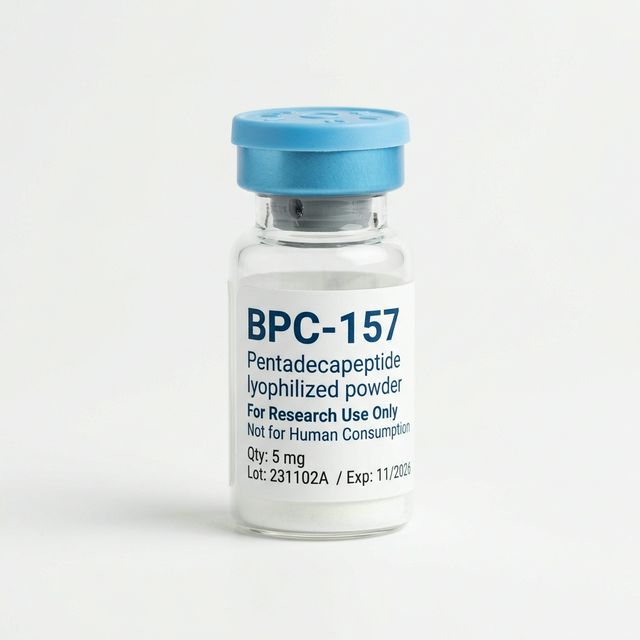
Ready to explore the potential benefits of BPC-157 for yourself? PeptidesAgent.com partners with trusted providers to bring you high-quality research peptides.
This content is for educational purposes only and is not medical advice. Always consult a qualified healthcare provider before starting any peptide protocol.