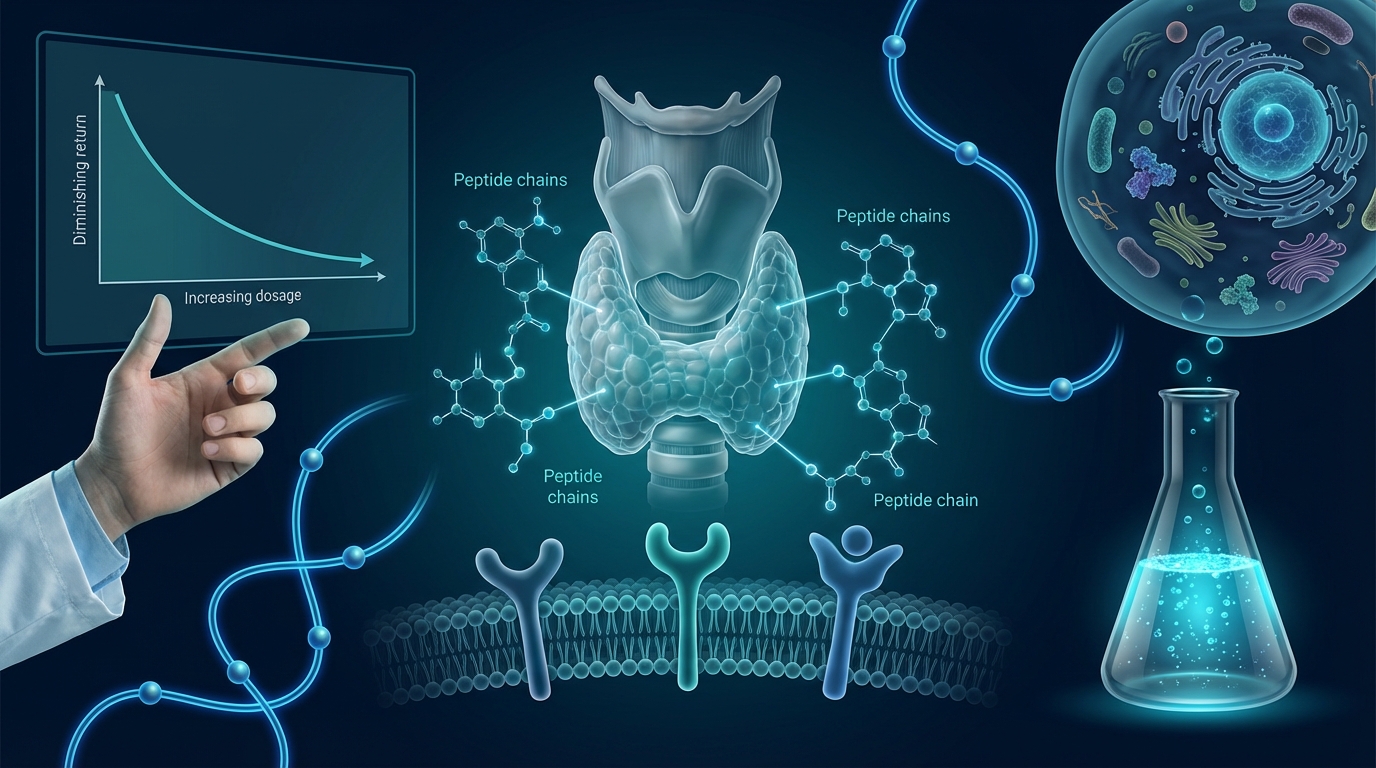
Doctor Explains Why More Retatrutide Doesnt Mean Better Results - our team Bach
If you've been using retatrutide and wondering why increasing your dose isn't delivering the fat loss results you expected — or worse, why you feel worse the more you take — you're not alone. A common and costly mistake in the peptide research community is treating retatrutide like a simple appetite suppressant and assuming that more always means better. The reality is far more nuanced, and understanding the biological mechanisms behind this powerful triple agonist peptide could be the difference between remarkable results and a plateau that leaves you frustrated, fatigued, and no closer to your goals.
What Retatrutide Actually Is — And Why Most People Get It Wrong
Retatrutide is frequently mischaracterized as just another GLP-1 weight loss drug. That description dramatically undersells what this compound does at the receptor level. Retatrutide is a triple agonist, meaning it simultaneously activates three distinct receptor pathways in the body: GLP-1 (glucagon-like peptide-1), GIP (glucose-dependent insulinotropic peptide), and glucagon. Each of these receptors plays a unique and synergistic role in metabolism, energy expenditure, and body composition. Ignoring any one of them — or overwhelming the system with excessive dosing — can derail the entire process.
Think of it less like a simple hunger switch and more like a precision instrument calibrated to work with your body's existing hormonal environment. When that environment is disrupted — through poor thyroid function, electrolyte imbalances, or worsening insulin resistance — retatrutide cannot perform as intended, regardless of how high the dose climbs.
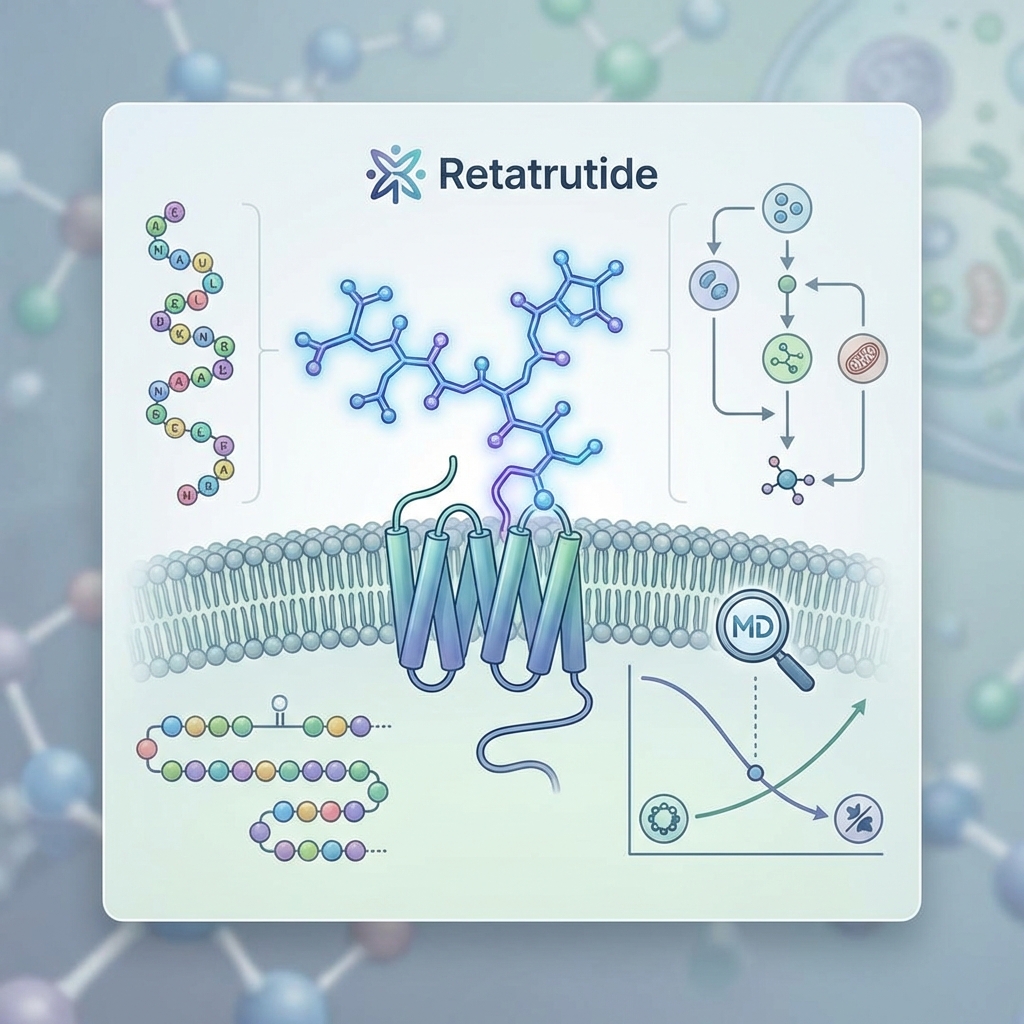
The Three Receptor Pathways: A Deep Dive
GLP-1: Appetite Suppression and Insulin Sensitivity
GLP-1 receptors are located in the hypothalamus, specifically in the lateral and paraventricular nuclei — regions that govern appetite regulation. When retatrutide binds to these receptors, it suppresses neuropeptide Y, a powerful appetite-stimulating neuron, while simultaneously activating POMC (pro-opiomelanocortin) neurons, which signal satiety. The result is that hunger is essentially turned off at the neurological level — not through willpower, but through direct receptor engagement.
Beyond appetite suppression, GLP-1 slows gastric emptying, prolonging the feeling of fullness after meals. A 2023 study published in Diabetes Care demonstrated that GLP-1 activation improves insulin sensitivity by approximately 25%, and notably, this improvement occurs independently of weight loss — meaning the metabolic benefits begin even before significant body composition changes are visible.
GIP: Thermogenesis and Brown Fat Conversion
GIP was historically considered a weak incretin hormone with limited clinical relevance. Recent research has dramatically revised that view. GIP receptors are found on brown adipose tissue, skeletal muscle, and the liver. When activated, GIP increases energy expenditure through sympathetic nervous system stimulation.
A 2023 study in Nature Metabolism showed that GIP activation increases metabolic rate by approximately 10–15% through thermogenesis and mitochondrial uncoupling — a process where fat cells generate heat rather than store energy. Perhaps even more compelling, GIP promotes the browning of white adipose tissue, converting energy-storing white fat into metabolically active brown fat. A 2023 Cell Metabolism study found that GIP activation increases brown adipose tissue markers by as much as 40% — a significant structural shift in how the body handles stored energy.
Glucagon: Lipolysis and Hepatic Energy Expenditure
The glucagon component is the one most often overlooked — even by experienced clinicians. Glucagon activates hepatic lipolysis (the breakdown of fat stored in the liver) and whole-body lipolysis through activation of hormone-sensitive lipase in adipose tissue. A 2023 study in the Journal of Clinical Endocrinology & Metabolism reported that glucagon increases circulating free fatty acid levels by an extraordinary 80%, making stored fat dramatically more available as fuel.
Glucagon also drives hepatic gluconeogenesis — the liver's process of producing glucose from non-carbohydrate sources. This process is metabolically expensive, meaning the liver itself burns more energy to complete it. Research published in Metabolism estimated that glucagon-induced hepatic glucose production increases energy expenditure by approximately 200–300 calories per day.
The Combined Effect: What the Math Actually Tells Us
When all three receptor pathways are functioning optimally together, the cumulative metabolic impact is substantial:
- GLP-1 reduces caloric intake by approximately 20–30% and improves insulin sensitivity by 25–30%
- GIP increases energy expenditure by 10–15% and promotes significant brown fat conversion
- Glucagon activates lipolysis and increases daily energy expenditure by 200–300 calories
The total effect, when biology is optimized, can amount to a 30–40% reduction in caloric intake combined with a 20–30% increase in energy expenditure. This is why retatrutide, used correctly, is considered one of the most powerful body composition tools in current peptide research — and why it fails so dramatically when the underlying biology is compromised.
Why Increasing the Dose Can Make Things Worse
Consider a real-world example: a patient who had been escalating retatrutide doses from 2 mg all the way up to 15 mg per week under informal guidance, with zero improvement in body composition and worsening symptoms including nausea, fatigue, brain fog, and complete loss of appetite suppression. Lab work revealed a collapsed metabolic picture: a TSH of 4.2 (indicating thyroid suppression), free T3 of 2.1 (well below optimal), potassium at 3.4, severely depleted magnesium, and a fasting insulin of 8.2 — all hallmarks of significant insulin resistance and metabolic dysfunction.
When the thyroid is suppressed, the metabolic machinery that retatrutide is designed to accelerate simply isn't functioning. When electrolytes like magnesium and potassium are depleted, cellular signaling — including the receptor pathways that retatrutide depends on — becomes impaired. When insulin resistance worsens, glucose metabolism cannot respond appropriately to GLP-1 stimulation. In this state, escalating the dose does not solve the problem — it compounds it. The peptide has no functional biological environment to work within, and the increased dose amplifies side effects without delivering any of the intended benefits.
The Importance of Biological Readiness Before Dosing Escalation
Retatrutide research emphasizes a crucial principle: the compound works synergistically with your body's existing hormonal and metabolic systems, not in isolation from them. Before escalating any peptide dose, foundational biomarkers must be assessed and optimized. These include:
- Thyroid function (TSH, free T3, free T4)
- Fasting insulin and blood glucose
- Electrolyte levels, particularly magnesium and potassium
- Inflammatory markers and liver function
- Sex hormone panels where relevant
Without this biological baseline, even a perfectly dosed peptide protocol operates in a compromised environment. The body is a synergistic organism — one dysfunctional system will limit the performance of every other system connected to it.
Key Takeaways
- Retatrutide is a triple agonist, activating GLP-1, GIP, and glucagon receptors simultaneously — each contributing uniquely to fat loss and metabolic improvement.
- More is not always better. Escalating doses without addressing underlying biological dysfunction leads to worsening side effects and zero body composition progress.
- GLP-1 suppresses appetite neurologically and improves insulin sensitivity independent of weight loss.
- GIP increases metabolic rate through thermogenesis and converts white fat to metabolically active brown fat.
- Glucagon drives lipolysis and increases daily energy expenditure through hepatic gluconeogenesis.
- Lab work is non-negotiable. Thyroid function, insulin levels, and electrolyte status must be assessed before adjusting any peptide protocol.
- If retatrutide is producing symptoms like nausea, brain fog, and fatigue with no results, the issue is likely a compromised biological environment — not an insufficient dose.
- Peptide research should be approached systematically, with biology-first thinking, not dose escalation as a default response to stalled results.
This content is for educational purposes only and is not medical advice. Retatrutide and related compounds are research peptides and are not approved for human therapeutic use by the FDA. Always consult a qualified healthcare professional before beginning any peptide protocol or making changes to your health regimen. Never adjust dosing strategies without proper medical supervision and appropriate laboratory testing.