Raising Growth Hormone
The Ultimate Growth Hormone Secretagogue Stack: CJC-1295, Ipamorelin, and Sermorelin Explained
Growth hormone deficiency is one of the most underdiagnosed and underappreciated drivers of accelerated aging, stubborn body fat, muscle loss, poor cardiovascular health, and cognitive decline — and most people have no idea their levels are low. This comprehensive research guide breaks down the science behind growth hormone's role in virtually every repair system in the human body, explores why exogenous HGH is rarely the right answer, and presents what current peptide research identifies as the most advanced growth hormone secretagogue stack: CJC-1295 (without DAC), Ipamorelin, and Sermorelin. Whether your goal is fat loss, lean muscle gain, bone density, cardiovascular protection, or longevity, understanding this stack from a mechanistic level will change how you think about hormonal optimization entirely.
Why Growth Hormone Is the Master Key to Every System in Your Body
Growth hormone (GH) is not simply a performance-enhancing compound reserved for athletes and bodybuilders. This is one of the most pervasive misconceptions in modern health culture. In reality, GH functions as a master regulatory signal — a biological master key that unlocks virtually every repair, regeneration, and metabolic system the human body possesses. When GH levels are chronically low, the downstream consequences are systemic and severe.
The effects of growth hormone deficiency span far beyond the gym. Research consistently demonstrates that low GH is associated with accelerated biological aging, impaired immune function, neurological decline, cardiovascular disease, and dramatically reduced quality of life. It is not an exaggeration to say that if growth hormone is low, every system in the body is compromised.
Understanding this is critical before exploring any peptide intervention. The goal of the protocols discussed in this article is not to flood the body with exogenous hormones — it is to restore the body's own natural capacity to produce growth hormone through targeted stimulation of the pituitary gland using research peptides known as growth hormone secretagogues and growth hormone releasing hormone (GHRH) analogs.
The Biological Consequences of Low Growth Hormone: Research-Backed Evidence
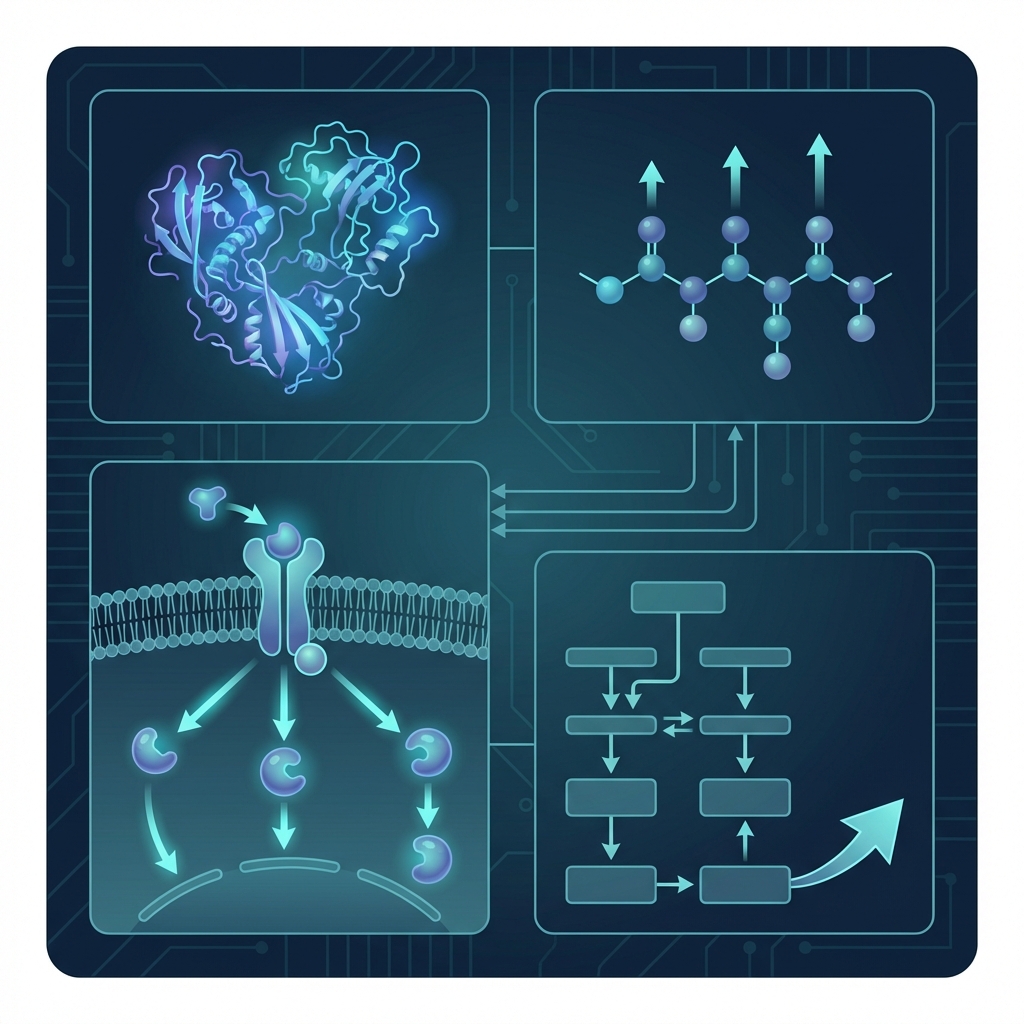
Before diving into the stack itself, it is essential to understand precisely what is at stake when GH levels fall below optimal range. The following areas of physiology are directly and measurably impacted by growth hormone deficiency.
Fat Oxidation and Lipolysis
Growth hormone is the primary signal for lipolysis — the enzymatic breakdown of stored triglycerides into free fatty acids (FFAs) that can be used for energy. Adipose tissue (fat cells) expresses GH receptors, and when GH binds to these receptors, it activates hormone-sensitive lipase, the enzyme responsible for mobilizing stored fat. When GH is deficient, adipose tissue becomes essentially locked. No amount of caloric restriction or cardiovascular exercise can fully compensate for this biochemical blockade.
A 2015 study published in Endocrine Reviews (Sackmann-Sala et al.) demonstrated that GH-deficient individuals show 3.5× impaired lipolysis compared to healthy controls, with fat oxidation capacity reduced by 68% — even when performing identical exercise protocols. This means two people doing the exact same workout will achieve radically different fat loss outcomes based solely on their GH status. In a state of GH deficiency, the body is biochemically incapable of efficiently burning fat.
Muscle Protein Synthesis and Sarcopenia
Growth hormone drives anabolic activity primarily through its stimulation of IGF-1 (Insulin-Like Growth Factor 1), produced in the liver. IGF-1 is the metabolic workhorse of musculoskeletal biology. It directly stimulates amino acid uptake into muscle cells and activates mTOR signaling — the master regulatory pathway for muscle protein synthesis.
A 2012 study by Clemens, published in Growth Hormone and IGF Research, found that IGF-1 deficiency reduces muscle protein synthesis by 43% and increases protein breakdown by 31%, resulting in progressive sarcopenia (muscle wasting) even in individuals who train regularly. The body begins catabolizing its own muscle tissue because it cannot synthesize new protein at a sufficient rate. This is a critical mechanism underlying age-related muscle loss.
Bone Density and Fracture Risk
GH and IGF-1 directly stimulate osteoblasts (bone-building cells), increase calcium resorption from the intestines, and drive improvements in bone mineral density. When GH is deficient, osteoclasts (bone-destroying cells) become hyperactive and outpace bone formation. The clinical result is progressive bone loss, osteopenia, and osteoporosis.
A 2018 study by Vestergaard, published in the Journal of Bone and Mineral Metabolism, showed that GH-deficient patients carry a 3× increased fracture risk, with bone turnover completely dysregulated and resorption significantly exceeding formation. Optimizing endogenous GH production — in combination with weight-bearing exercise — represents a mechanistically sound, biology-first approach to skeletal health.
Cardiovascular Health
Growth hormone and IGF-1 directly affect cardiac myocytes (heart muscle cells). Together, they increase myocardial contractility, improve endothelial function (the lining of blood vessels), and reduce vascular inflammation. GH deficiency has the opposite effect: the heart weakens, endothelial dysfunction sets in, and cardiovascular disease risk escalates dramatically.
A 2016 study published in Nature Reviews Cardiology (Solomon et al.) demonstrated that GH deficiency increases cardiovascular mortality by more than 2×, decreases left ventricular mass by 12%, and makes systolic dysfunction a near-certainty in long-term deficiency. Growth hormone is not optional for a healthy heart.
Cognitive Function and Neuroplasticity
Growth hormone crosses the blood-brain barrier and directly influences neuronal health. Both GH and IGF-1 increase the production of BDNF (Brain-Derived Neurotrophic Factor) — often described in neuroscience research as "Miracle-Gro for the brain" — which supports the growth, maintenance, and protection of neurons. GH deficiency is associated with impaired memory, reduced executive function, cognitive fog, and accelerated neurodegeneration. Restoring GH to optimal levels is a meaningful lever for protecting long-term brain health.
Why Exogenous HGH Is Not the Answer (For Most People)
A common misconception is that the solution to low growth hormone is simply injecting recombinant human growth hormone (rHGH) from an external source. For the vast majority of people, this is not the optimal approach. Exogenous HGH bypasses the body's own pulsatile secretion system, suppresses natural production through negative feedback, and carries significant risks including insulin resistance, edema, joint pain, and potential long-term endocrine disruption.
Exogenous HGH is medically appropriate only in cases where the pituitary gland itself has been damaged, removed, or is functionally incapable of producing GH (e.g., pituitary adenoma, surgical resection, radiation damage). For the overwhelming majority of individuals experiencing age-related GH decline or lifestyle-induced GH suppression, the correct intervention is to restore the pituitary's own capacity to secrete growth hormone — and this is precisely what the secretagogue stack accomplishes.
The Ultimate Growth Hormone Secretagogue Stack: CJC-1295, Ipamorelin, and Sermorelin
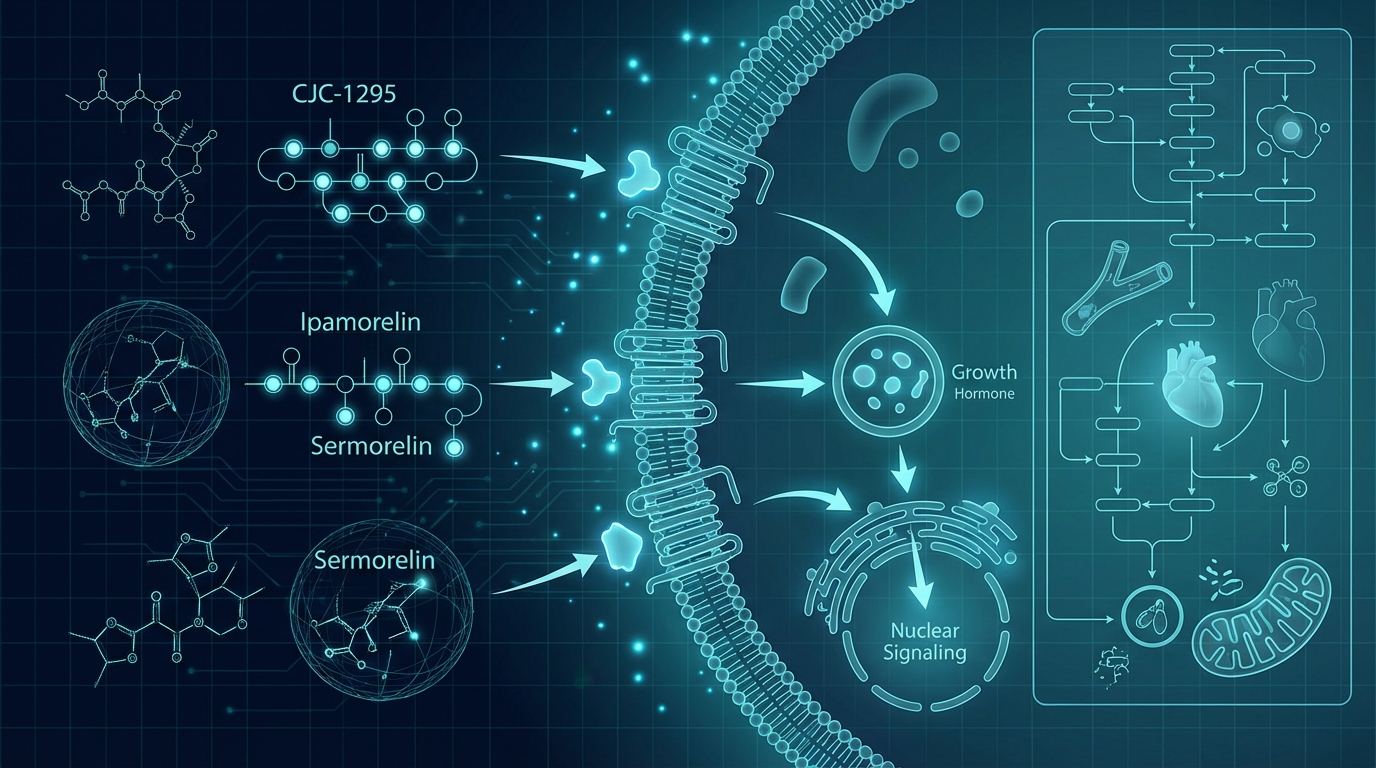
The research stack discussed throughout this article centers on three primary compounds: Sermorelin, Ipamorelin, and CJC-1295 without DAC. This combination is considered by many researchers in the field to represent the most advanced and physiologically intelligent approach to growth hormone optimization currently available. Here is why each component earns its place in the stack.
Sermorelin
Sermorelin is a synthetic analog of GHRH (Growth Hormone Releasing Hormone) — specifically, the first 29 amino acids of endogenous GHRH, which constitute the biologically active fragment. Sermorelin binds to GHRH receptors in the anterior pituitary gland and stimulates the natural, pulsatile release of growth hormone. It has one of the longest safety records of any GH secretagogue and is widely studied for its ability to restore youthful GH secretion patterns in aging individuals. Critically, Sermorelin works within the body's normal feedback systems — it does not override them.
Ipamorelin
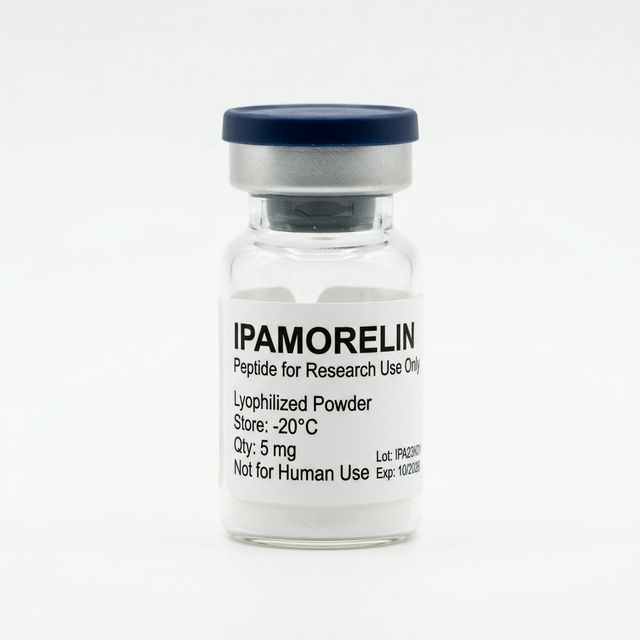
Ipamorelin is a selective growth hormone secretagogue receptor (GHSR) agonist — also classified as a GH releasing peptide (GHRP). It stimulates GH release through a mechanism distinct from GHRH, acting on ghrelin receptors in the pituitary. Ipamorelin is prized in research for its high selectivity: it produces robust GH pulses without meaningfully elevating cortisol, prolactin, or ACTH, which are the unwanted side-effect hormones associated with older-generation GHRPs like GHRP-2 and GHRP-6. This clean selectivity profile makes Ipamorelin the preferred GHRP component in any serious GH optimization stack.
CJC-1295 Without DAC
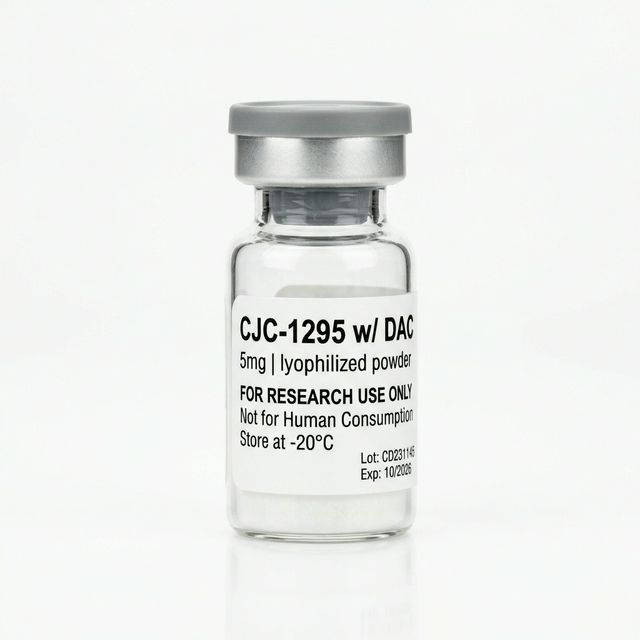
CJC-1295 is a GHRH analog with significantly enhanced potency compared to Sermorelin. The critical distinction in this stack is the use of CJC-1295 without DAC (Drug Affinity Complex). The DAC version of CJC-1295 has an extended half-life of approximately 8 days, which creates a sustained, non-pulsatile elevation of GH — essentially a continuous "GH bleed." While this sounds appealing on the surface, it is actually counterproductive for physiological optimization. The body's natural GH secretion is pulsatile — it occurs in discrete, high-amplitude bursts, primarily during slow-wave sleep. Mimicking this pulsatility is critical for maintaining receptor sensitivity, preserving the downstream IGF-1 response, and avoiding the desensitization that comes with continuous stimulation.
CJC-1295 without DAC has a shorter half-life (approximately 30 minutes), which means each injection produces a discrete, pulse-like release of GH that closely mirrors natural physiology. When combined with Ipamorelin, the two compounds act on different receptor pathways simultaneously — a synergistic combination that produces significantly greater GH pulse amplitude than either compound alone. This dual-pathway stimulation is the mechanistic foundation of why this particular combination is so effective.
The addition of Sermorelin to this stack provides a third layer of pituitary stimulation and has been shown to support long-term pituitary health and responsiveness, making it a valuable component for sustained, long-term protocols rather than short cycles.
Dosing Protocol for the CJC-1295, Ipamorelin, and Sermorelin Stack
The following table summarizes the dosing parameters discussed in the research context for this stack. Note that specific numeric doses, frequencies, and cycle lengths were not explicitly stated in the source material for all compounds. Fields marked "Not specified" reflect the absence of that data in the transcript — these should be filled in based on current research literature and, critically, individualized by a qualified healthcare provider.
- Compound: CJC-1295 Without DAC — Frequency: Pulsatile dosing emphasized; specific frequency not stated
- Compound: Ipamorelin
- Compound: Sermorelin
Shop Featured Peptides
Explore high-quality research peptides. Use our referral link to support independent research.