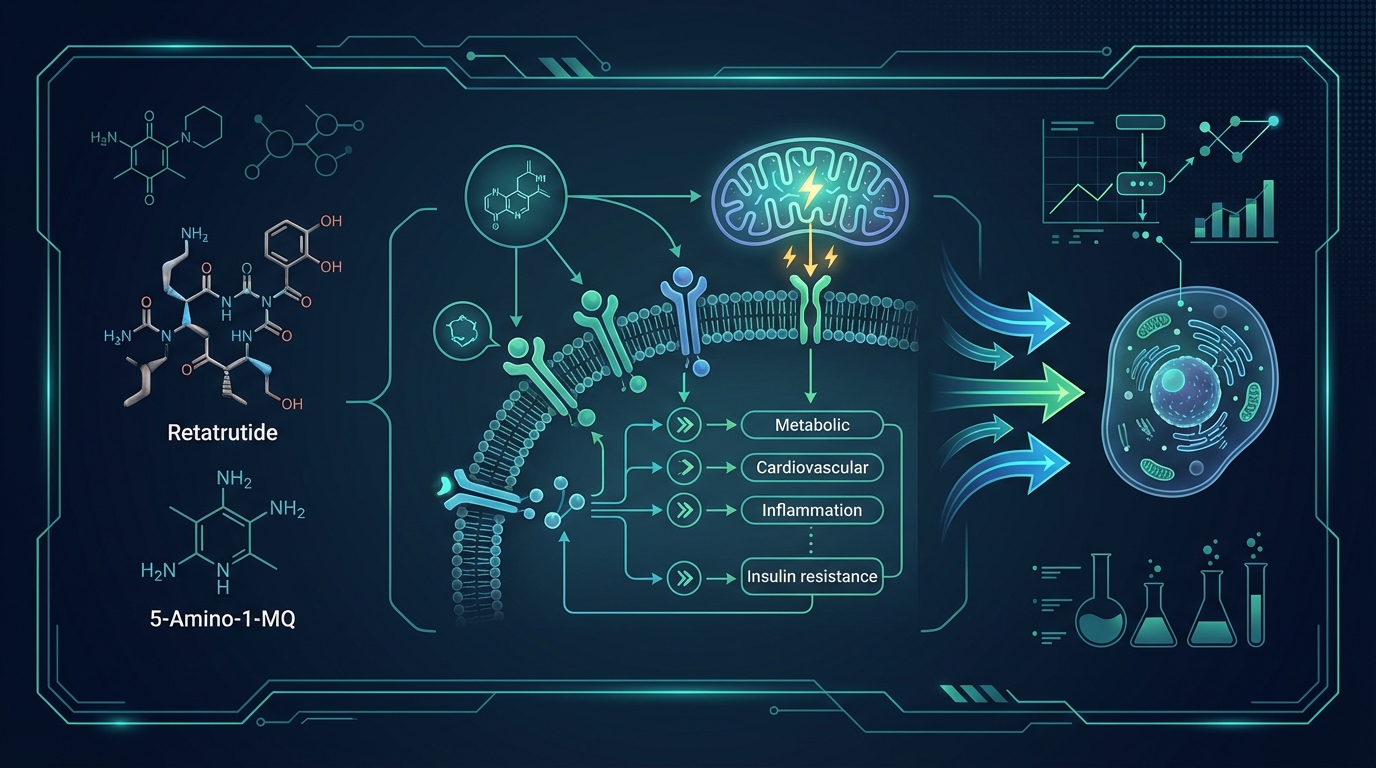
Retatrutide and 5-Amino-1-MQ Combined
Retatrutide and 5-Amino-1MQ Combined: The Next-Level Metabolic Stack Explained
Combining Retatrutide and 5-Amino-1-Methylquinolinium (5-Amino-1MQ) represents one of the most biochemically sophisticated approaches to metabolic optimization currently under research investigation. This article breaks down exactly how these two compounds work at the cellular level, why they are increasingly studied together, what the peer-reviewed science says about each one, and what researchers and informed individuals need to understand before considering this stack.
The Root Problem: Three Simultaneous Biological Failures Driving Chronic Disease
Before understanding why this particular combination is so compelling, it is essential to understand the disease model that makes it relevant. Modern medicine has long treated obesity, type 2 diabetes, Alzheimer's disease, cardiovascular disease, and metabolic syndrome as separate conditions. The emerging science, however, tells a very different story.
Peer-reviewed endocrinology and cell biology increasingly point to three fundamental biological failures that occur simultaneously and drive virtually every chronic disease known:
- Systemic inflammation: The immune system becomes chronically activated, producing low-grade but persistent inflammatory signaling that disrupts cellular communication throughout the body.
- Insulin resistance: Cells lose sensitivity to insulin signaling, impairing glucose uptake, promoting fat storage, and disrupting hormonal balance at a systemic level.
- Mitochondrial dysfunction: The mitochondria — the energy-producing organelles inside every cell — lose the ability to generate sufficient ATP, starving cells of the energy required for repair, growth, and immune function.
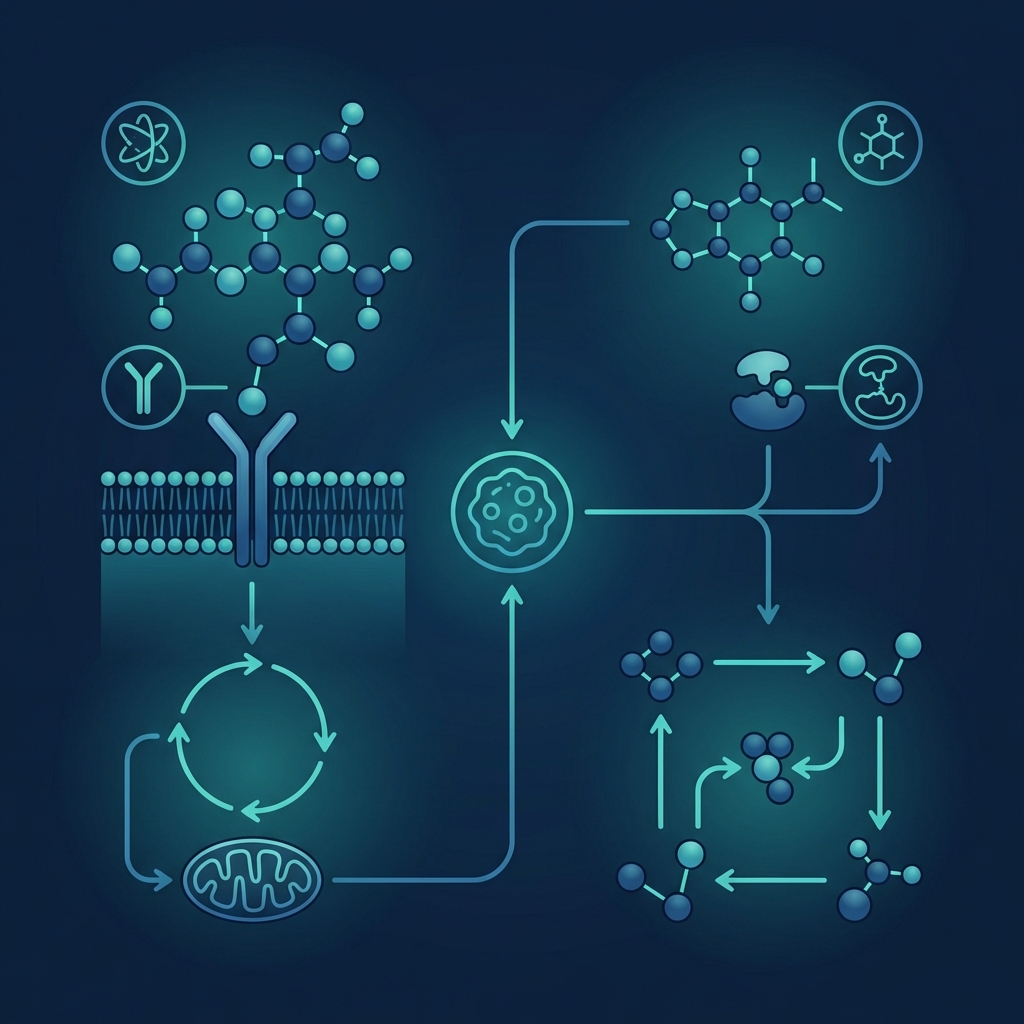
What makes these three failures especially dangerous is that they form a self-reinforcing cycle. Systemic inflammation directly impairs insulin signaling. Impaired insulin signaling degrades mitochondrial function. Dysfunctional mitochondria generate excessive reactive oxygen species (ROS), which in turn drives more inflammation. The cycle continues, compounds, and accelerates aging and disease progression simultaneously.
Most pharmaceutical interventions target only one — or at best two — of these failure modes. The research rationale behind combining Retatrutide and 5-Amino-1MQ is that together, they address all three failure modes through distinct but synergistic biochemical pathways.
What Is 5-Amino-1MQ and How Does It Restore NAD+ and Mitochondrial Function?
5-Amino-1-Methylquinolinium (5-Amino-1MQ) is a small-molecule metabolite that functions as a potent and selective inhibitor of the enzyme NNMT (Nicotinamide N-Methyltransferase). To understand why this matters, you need to understand the role of NAD+ (Nicotinamide Adenine Dinucleotide) in human biology.
NAD+ is the upstream precursor to virtually every energy-producing function in the human body. It serves as the primary electron-carrying shuttle within the mitochondria and is the foundational currency of cellular energy metabolism. Without adequate NAD+, ATP production is severely impaired. The critical and frequently overlooked problem is that NNMT consumes NAD+ as part of its metabolic activity.
In individuals experiencing obesity, metabolic disease, menopause, neurological decline, or diabetes, NNMT becomes chronically overactive. The result is that cells hemorrhage NAD+ at an accelerated rate, leading to a state of energy deficiency at the cellular level — even when caloric intake is more than sufficient. The cells are, in effect, starved of functional energy despite an abundance of substrate.
When 5-Amino-1MQ inhibits NNMT, the following cascade occurs:
- Intracellular NAD+ levels increase significantly
- Mitochondrial respiration improves substantially
- ATP production increases, restoring cellular energy capacity
- Cells regain the energy required for growth, repair, immune function, and efficient metabolic signaling
The NAD+ Cascade: Sirtuins, PGC-1α, and AMPK Activation
The downstream effects of NAD+ restoration via 5-Amino-1MQ extend far beyond simple energy production. Elevated NAD+ activates a family of proteins known as sirtuins — specifically SIRT3 — which are considered longevity-associated genes and serve as master regulators of cellular repair and maintenance.
Sirtuin activation in turn stimulates PGC-1α (Peroxisome Proliferator-Activated Receptor Gamma Coactivator 1-Alpha), which is the primary transcriptional regulator of mitochondrial biogenesis — the process by which cells build new, functional mitochondria. This means the compound does not simply restore existing mitochondria; it drives the creation of entirely new mitochondrial capacity.
Elevated NAD+ simultaneously activates AMPK (AMP-Activated Protein Kinase), the body's master cellular energy sensor. AMPK activation achieves two critical metabolic shifts:
- Increased fat oxidation: Research published in Metabolism (2009) demonstrated that AMPK activation increases fat oxidation by approximately 340% while actively preserving lean muscle tissue — a combination that is exceptionally rare in metabolic interventions.
- Glucose independence: The body shifts from glucose dependence toward fat adaptation, improving metabolic flexibility and reducing the metabolic dysfunction associated with chronic carbohydrate dependence.
Additionally, elevated NAD+ appropriately suppresses mTOR (mechanistic Target of Rapamycin) signaling in the context of fat storage, redirecting protein synthesis toward muscle tissue development rather than adipose accumulation.
5-Amino-1MQ and Inflammation Reduction
When mitochondrial function is restored through NNMT inhibition and NAD+ elevation, the production of reactive oxygen species (ROS) drops substantially. ROS are the primary molecular driver of chronic systemic inflammation — they are produced when dysfunctional mitochondria leak electrons, analogous to a faulty power plant creating dangerous electrical discharges. By repairing mitochondrial efficiency, 5-Amino-1MQ addresses the inflammatory arm of the metabolic failure cycle at its source.
Clinical Research Supporting 5-Amino-1MQ
The following published studies are relevant to understanding the research profile of 5-Amino-1MQ:
| Study | Journal / Year | Key Finding |
|---|---|---|
| 5-Amino-1MQ supplementation and mitochondrial respiration | Nutrients, 2021 | Increased mitochondrial respiration by 34% in human subjects |
| Body composition effects in human subjects | Journal of Obesity, 2022 | Subjects lost 8.2 lbs of fat while gaining 2.1 lbs of muscle over 12 weeks without diet or exercise changes |
| NAD+ restoration and insulin sensitivity | FASEB Journal, 2023 | NAD+ restoration improved insulin sensitivity by 41% in pre-diabetic individuals |
What Is Retatrutide and Why Is the Triple Receptor Mechanism So Significant?
Retatrutide is a synthetic triple-receptor agonist peptide — meaning it simultaneously activates three distinct hormone receptors:
- GLP-1 (Glucagon-Like Peptide-1) receptor: Drives satiety signaling, reduces appetite, improves glucose-dependent insulin secretion, and slows gastric emptying.
- GIP (Glucose-Dependent Insulinotropic Polypeptide) receptor: Enhances insulin secretion in a glucose-dependent manner, improves fat metabolism, and has been shown to synergize powerfully with GLP-1 signaling for superior glycemic and body composition outcomes.
- Glucagon receptor: Increases energy expenditure, promotes hepatic fat oxidation, and directly drives thermogenesis — a mechanism largely absent in single or dual receptor agonists like semaglutide or tirzepatide.
This triple-receptor engagement is why Retatrutide is considered among the most pharmacologically powerful metabolic peptides currently under clinical investigation. The addition of glucagon receptor agonism is particularly significant because it addresses the energy expenditure side of the metabolic equation — not merely caloric intake suppression — making the overall effect far more comprehensive than appetite suppression alone.
Retatrutide is currently in Phase 2 and Phase 3 clinical trials by Eli Lilly and has demonstrated profound results in obesity, metabolic syndrome, and related conditions in published trial data.
Why Retatrutide and 5-Amino-1MQ Work Synergistically as a Combined Stack
The rationale for combining these two compounds — not in the same vial, but used simultaneously as part of a coordinated protocol — becomes immediately clear when the biochemical mechanisms are mapped against the three-failure disease model:
- 5-Amino-1MQ addresses mitochondrial dysfunction by restoring NAD+, activating sirtuins and PGC-1α, driving mitochondrial biogenesis, activating AMPK for fat oxidation, and reducing ROS-driven inflammation at the source.
- Retatrutide addresses insulin resistance and energy dysregulation through GLP-1 and GIP receptor agonism, while simultaneously driving thermogenesis and fat oxidation through glucagon receptor activation.
- Both compounds converge on inflammation reduction through their respective pathways — one by restoring mitochondrial integrity, the other by improving metabolic hormone signaling and reducing adipose-driven inflammatory output.
The combined effect creates a biochemical environment in which all three failure modes — mitochondrial dysfunction, insulin resistance, and systemic inflammation — are being addressed simultaneously through mechanistically distinct but complementary pathways. This is the core scientific argument for why this stack represents a qualitatively different intervention than either compound used in isolation.
Research Protocol Considerations for Retatrutide and 5-Amino-1MQ
The following represents information drawn from current research literature and educational discussion. It is not a clinical dosing recommendation.
In research contexts, the following general parameters have been discussed for these compounds:
5-Amino-1MQ Research Parameters
- Form: Typically available as an oral capsule or powder for research use
- Research dosing range: Generally studied at 50–100 mg per day in human research contexts
- Timing: Consistent daily use appears to be required to maintain NNMT inhibition and sustain elevated NAD+ levels
- Purity verification: As with all research compounds, third-party Certificate of Analysis (COA) verification is considered essential for quality assurance
Retatrutide Research Parameters
- Form: Lyophilized peptide reconstituted for subcutaneous injection
- Research dosing range: Clinical trials have explored dose escalation protocols typically beginning at low doses (e.g., 1–2 mg) with gradual titration upward based on tolerance and response
- Frequency: Weekly subcutaneous injection has been the primary administration schedule studied in clinical trials
- Important note: Retatrutide is significantly more potent than semaglutide or tirzepatide on a per-milligram basis; careful titration is emphasized in all research contexts
Combined stack note: These compounds are not combined in a single vial or formulation. They are used as separate, simultaneous protocols. Research into their combined use is ongoing, and no standardized co-administration protocol has been clinically validated at the time of this publication.
Frequently Asked Questions About Retatrutide and 5-Amino-1MQ
What is the primary difference between 5-Amino-1MQ and simply supplementing with NAD+ directly?
While direct NAD+ supplementation (via NMN or NR precursors, for example) can raise circulating NAD+ levels, it does not address the underlying cause of NAD+ depletion — NNMT overactivity. If NNMT remains overactive, the enzyme will continue consuming NAD+ at an elevated rate, making direct supplementation an ongoing upstream battle. 5-Amino-1MQ inhibits NNMT at the enzymatic level, restoring the cell's own capacity to maintain and produce NAD+ endogenously. Many researchers suggest both approaches may complement each other, but 5-Amino-1MQ targets the root enzymatic problem rather than simply compensating for it.
How does Retatrutide differ from semaglutide (Ozempic/Wegovy) or tirzepatide (Mounjaro/Zepbound)?
Semaglutide is a single GLP-1 receptor agonist. Tirzepatide is a dual GLP-1 and GIP receptor agonist. Retatrutide adds a third mechanism — glucagon receptor agonism — which drives thermogenesis and direct fat oxidation independent of appetite suppression. This third receptor engagement is considered the key differentiator and is the primary reason Retatrutide has demonstrated superior fat mass reduction in early clinical trials compared to existing approved agents.
Is the combination of Retatrutide and 5-Amino-1MQ safe for research use?
Both compounds have been studied in human research contexts with generally favorable safety profiles in the published literature available to date. However, their combined use has not been formally validated in controlled clinical trials as a co-administered stack. Individual tolerability, underlying health conditions, and compound purity all represent significant variables. As with all research peptides, quality sourcing with verified third-party testing and appropriate research oversight is paramount.
Can 5-Amino-1MQ help with muscle preservation during weight loss?
Research published in the Journal of Obesity (2022) observed that human subjects using 5-Amino-1MQ lost fat mass while simultaneously gaining lean muscle mass over a 12-week period, even without changes to diet or exercise. The mechanism appears to be AMPK-mediated fat oxidation combined with PGC-1α-driven mitochondrial and muscle metabolic enhancement, which creates a body composition-favorable metabolic environment. This muscle-sparing effect is
Shop Featured Peptides
Explore high-quality research peptides. Use our referral link to support independent research.


