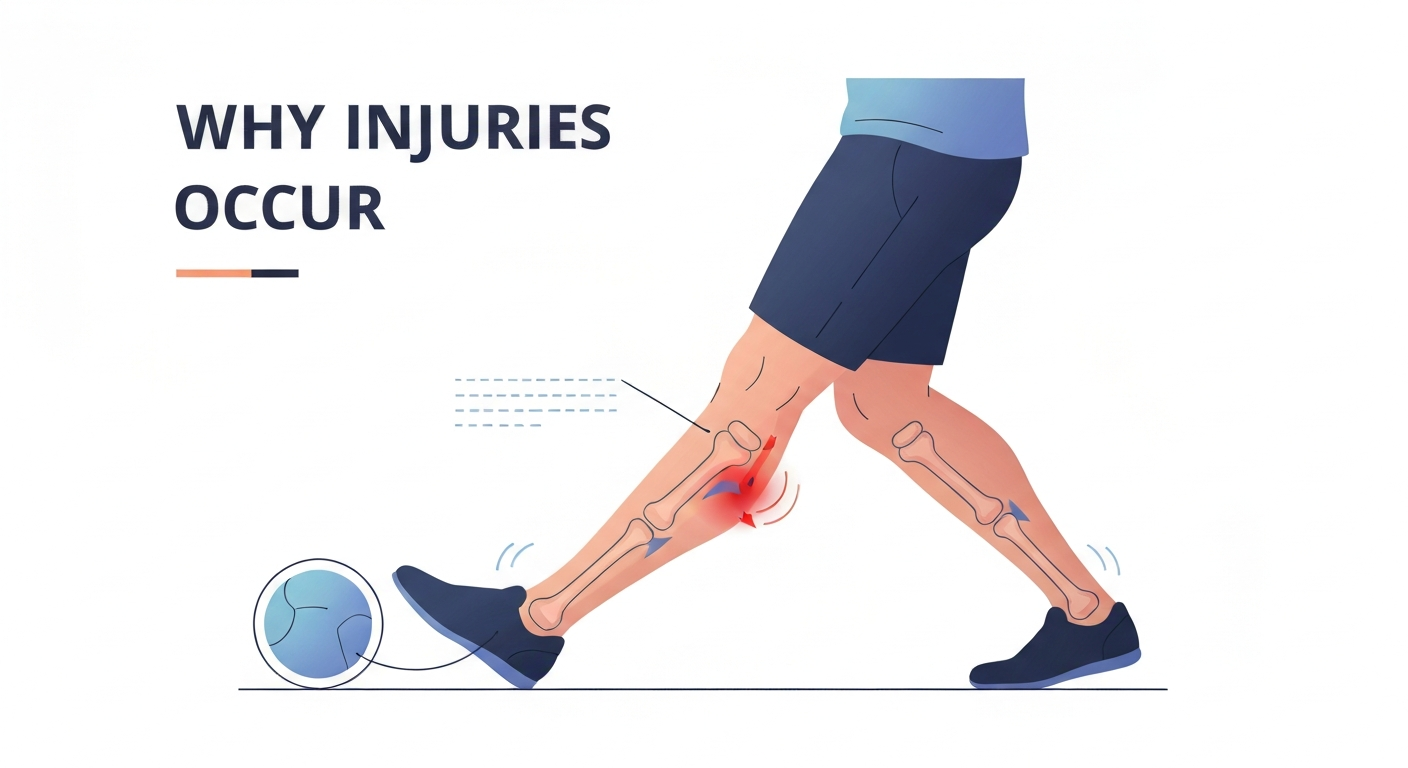
Why Your Injuries Heal So Slowly and What Actually Helps
Do you ever wake up with that nagging ache in your shoulder, a knee that just won't quit, or a wrist that's been bothering you for years? You've rested, you've iced, you've done all the "right" things, yet the pain persists, and healing feels like an uphill battle. If you're tired of injuries that linger for months or even years, you're not alone. The PeptidesAgent research team, drawing on expertise in biology and biochemistry, challenges the conventional wisdom that rest alone is the answer to effective injury recovery. The research team argues that the real bottleneck to healing isn't a lack of rest, but a profound cellular energy crisis within your body. This isn't magic; it's a deep dive into your biology, revealing how you can hack your body's healing processes to potentially go from 12 months of recovery to just 10-12 weeks.
The Hidden Truth: Your Body's Energy Crisis
Most people view an injury as simple damage. While damage is certainly a symptom, the research team posits that the underlying issue is a "metabolic bankruptcy" at a specific location in your body. When you tear a rotator cuff, injure a knee, or even suffer organ damage from an infection like COVID, what's truly happening at a cellular level?
ATP: The Cellular Currency of Repair
Tissue is destroyed, cells die, blood vessels are severed, and your immune system floods the area with inflammatory cytokines. But here's the critical, often overlooked, part: rebuilding that damage requires Adenosine Triphosphate (ATP) – the energy currency of every single cell in your body. Your 37 trillion cells are all running on ATP. When a fibroblast, the cell responsible for laying down collagen and rebuilding tissue, goes to work, it's not just thinking; it's actively synthesizing proteins, building the extracellular matrix, and creating new collagen cross-links. Every single one of these processes demands ATP hydrolysis. You are literally burning energy with every chemical bond formed.
The Energy Drain of Inflammation
The energy demands during injury are staggering. Research published in Nature Immunology by Esamia Tilch (19) demonstrated that immune cells fighting inflammation at an injury site consume glucose at a rate 400 times higher than resting immune cells. Your immune system, when activated, becomes a glucose-burning furnace. This means your body's energy reserves are rapidly depleted just to manage the initial inflammatory response, leaving less for actual repair.
Metabolic Triage: Survival First
In the face of injury or illness, your body enters a state the research team calls "metabolic triage." Your biology has one priority: to keep you alive. Not joyful, not optimized, just alive. With a finite amount of energy available from your mitochondria, your body makes a savage, survival-driven decision. It allocates energy based on a strict hierarchy:
- Priority One: Brain, lungs, kidneys, heart.
- Priority Two: Immune response to infection or inflammation.
- Priority Three: Pretty much everything else, including the healing you desperately desire for your chronic injury.
This explains why people with chronic injuries often never fully recover. They are stuck in a metabolic deficit, with their body allocating just enough energy to sustain life, but not enough to effectively rebuild damaged tissue. A 2021 study in News and Calder Immunology Today showed that during metabolic stress, the body systematically downregulates anabolic (building) pathways and upregulates catabolic (breaking down) pathways. This means your body starts literally eating itself – breaking down muscle, collagen, and structural proteins – to extract amino acids for survival. You're trying to heal that rotator cuff, but your body is simultaneously demolishing surrounding muscle tissue for energy. It's like trying to build a house while simultaneously tearing down its walls.
The Scar Tissue Trap
When your mitochondria hit their functional ceiling and energy is limited, your body prioritizes survival over quality healing. The immune response can become sloppy, leading to chronic, low-grade inflammation. Tissue heals, but it heals badly, forming scar tissue instead of functional tissue. This scar tissue is less efficient, requiring even more energy to maintain homeostasis. This creates a vicious cycle: less ATP production leads to slower healing, more scar tissue, and a further decline in function – a true "death spiral." A 2018 study by Rando and Ambrosio published in Cell highlighted this, showing that compromised mitochondrial function led to muscle injury recovery taking four times longer. The only variable? Mitochondrial ATP production capacity. It's an energy crisis, plain and simple.
Beyond Rest: Fueling Your Body's Healing Engine
The conventional advice to "rest" for healing is fundamentally flawed because rest, while preventing further damage, does not create energy. Healing is an active biological process that demands immense amounts of ATP. If your body is in metabolic bankruptcy, resting won't magically generate the billions of ATP molecules needed for repair.
Mitochondrial Power and NAD+
The key to unlocking rapid healing lies in restoring your body's capacity to produce energy efficiently. This brings us to a crucial co-enzyme: Nicotinamide Adenine Dinucleotide (NAD+). The research team emphasizes that NAD+ is not ATP itself, but something more foundational – it's a rate-limiting co-factor for mitochondrial function. Without sufficient NAD+, your mitochondria literally cannot produce ATP efficiently. Your cells are like factories running at 50% power.
NAD+ levels naturally decline with age, stress, inflammation, and infection. By the time you're injured and need maximum healing capacity, your body is likely already operating with a compromised energy supply. This means your body defaults to metabolic triage, healing slowly, forming scar tissue, and never fully restoring function – that nagging injury that "just hurts forever now."
NAD+ for Enhanced ATP Production
In your mitochondria, during cellular respiration, NAD+ accepts electrons from glucose and other substrates, reducing to NADH. This NADH then feeds into the electron transport chain, which pumps protons, driving ATP synthase (a process requiring magnesium) to produce ATP. Without adequate NAD+, this entire process grinds to a halt. Your mitochondria simply cannot produce ATP.
Compelling research, such as a 2016 study by KTO et al. published in Cell Metabolism, demonstrated that NAD+ supplementation restored mitochondrial function to near youthful levels in aged individuals, not partially, but nearly fully. The mitochondria began producing ATP at rates similar to young cells, providing "energy on top of energy."
When NAD+ is supplemented, particularly via subcutaneous (subq) injection (orals are ineffective due to digestive breakdown), you're not just giving your body a bit more energy; you're restoring the fundamental capacity for energy production. You're moving that mitochondrial factory from 50% to 90-100% capacity. Suddenly, your body has the energy available for healing, and the metabolic triage budget increases. More energy can be allocated to rebuilding tissue – not just tendons, ligaments, bones, and muscle, but also neurological, vascular, endothelial, and epithelial tissues. A 2020 study by Frederick in Science further supported this, showing that NAD+ supplementation improved wound healing by 45% due to increased mitochondrial ATP production and enhanced fibroblast activity.
Targeted Healing: The Role of Peptides
While NAD+ provides the essential fuel, certain peptides act as powerful signals, directing that energy to specific repair processes. The research team highlights BPC-157 (Body Protection Compound 157) as a key player in this signaling role.
BPC-157: The Body's Master Healer Signal
BPC-157 is a 15-amino acid peptide derived from gastric juice, widely discussed in research circles for its regenerative properties. The research team clarifies that it's not a miracle worker but a very specific signal. When administered, BPC-157 initiates a cascade of healing signals throughout the body:
- Upregulates Angiogenesis: It promotes the formation of new blood vessels, crucial for delivering oxygen and nutrients to damaged tissues. The research team notes it causes organized angiogenesis, distinguishing it from disorganized, chaotic cancer growth, and many studies indicate anti-cancer properties.
- Increases Fibroblast Proliferation: It encourages the rapid multiplication of fibroblasts, the cells vital for synthesizing collagen and repairing connective tissues.
- Enhances Collagen Deposition: It improves the laying down of new, healthy collagen, strengthening repaired tissues.
- Regulates Inflammatory Cytokines: It helps to modulate the inflammatory response, preventing chronic, destructive inflammation.
A 2019 study published in the Journal of Physiology and Pharmacology by Seaworth showed that BPC-157 accelerated tendon healing by 40%.
Why BPC-157 Needs Energy
Crucially, the research team emphasizes a critical caveat from the Seaworth study: the acceleration in healing was only observed in subjects with adequate energy supply. When researchers repeated the experiment with food-restricted animals (a low-energy state), BPC-157 showed minimal benefit. The research team uses the analogy of a Ferrari: "You could have the Ferrari... but if you don't have a tank full of gas, that Ferrari is useless. It just looks like a shiny dick with wheels in your driveway."
Think about it mechanically: BPC-157 tells fibroblasts to proliferate and migrate, but cell migration requires ATP. Protein synthesis requires ATP. The actual work of building new tissue requires ATP. Without adequate ATP, BPC-157 is just a signal floating around in a system that lacks the fuel to respond. This is why many people who use peptides alone, without addressing the underlying energy deficit, see mediocre results – they're sending signals without providing the necessary fuel.
The Synergistic Approach: Signals and Fuel for Rapid Recovery
The real power in accelerating injury healing lies in a synergistic approach that combines both the "fuel" (NAD+) and the "signal" (BPC-157). By restoring your body's energy production capacity with NAD+ and simultaneously directing that energy to specific repair processes with BPC-157, you create an environment where rapid, high-quality healing becomes possible. This approach allows your body to bypass the metabolic triage and catabolic processes that lead to slow healing and scar tissue, instead empowering it to rebuild and restore function efficiently. This is how you can potentially shift a 12-month recovery timeline to a mere 10-12 weeks.
The Importance of Quality and Administration
The research team strongly advocates for strict quality control in peptide sourcing. The research team stresses the importance of third-party testing with reputable labs like Janoshik, which is the industry standard for pharmaceutical companies, to ensure product purity and authenticity. The research team also unequivocally states that oral forms of peptides like BPC-157 and NAD+ are largely ineffective due to degradation by digestive enzymes and liver metabolism. Subcutaneous injection is the preferred and most effective route of administration for these compounds to ensure bioavailability and therapeutic impact.
Implementing Your Healing Protocol
While the research team provides a compelling framework, it's important to note that the transcript does not include specific dosage amounts for BPC-157 or NAD+. A personalized approach, guided by a qualified healthcare professional, is essential for determining the right protocol for your individual needs and injury type. However, the general principle involves ensuring adequate cellular energy and providing targeted healing signals.
General Protocol Considerations (Based on Transcript Principles):
| Compound | Primary Role | Administration Route | Dosage (as per transcript) |
|---|---|---|---|
| NAD+ | Cellular Energy Restoration, Mitochondrial Function | Subcutaneous Injection | Specific dosage not provided in transcript. Consult a healthcare provider. |
| BPC-157 | Healing Signal, Tissue Repair, Angiogenesis | Subcutaneous Injection | Specific dosage not provided in transcript. Consult a healthcare provider. |
Remember, while these compounds provide powerful biological tools, they work best when combined with a holistic approach to health, including proper nutrition, hydration, and appropriate movement (as the research team humorously advises, sometimes the best thing for sore legs is more squats, not less!).
Key Takeaways
- Slow Healing is an Energy Crisis: Chronic injuries linger not due to lack of rest, but insufficient cellular energy (ATP) for active repair.
- Metabolic Triage: Your body prioritizes survival over efficient healing, diverting energy from injury repair.
- Catabolism: In severe energy deficits, the body breaks down its own tissues (muscle, collagen) for survival.
- NAD+ is Key for Energy: Nicotinamide Adenine Dinucleotide (NAD+) is foundational for ATP production, and its decline impairs mitochondrial function. Supplementing NAD+ can restore youthful energy production.
- BPC-157 Signals Repair: Body Protection Compound 157 (BPC-157) promotes angiogenesis, fibroblast proliferation, and collagen deposition, acting as a potent healing signal.
- Synergy is Critical: BPC-157 requires adequate energy (from NAD+) to be effective. Combining fuel and signal creates an optimal environment for rapid, high-quality healing.
- Quality and Administration Matter: Oral peptides are largely ineffective; subcutaneous injection is preferred. Always ensure third-party tested products (e.g., Janoshik COA).
- Professional Guidance: Specific peptide protocols and dosages should always be determined in consultation with a qualified healthcare provider.
Shop Featured Peptides
Ready to explore the potential of peptides for your healing journey? PeptidesAgent.com partners with trusted research suppliers to provide high-quality, third-party tested compounds. Click below to learn more and shop for the peptides discussed in this article:
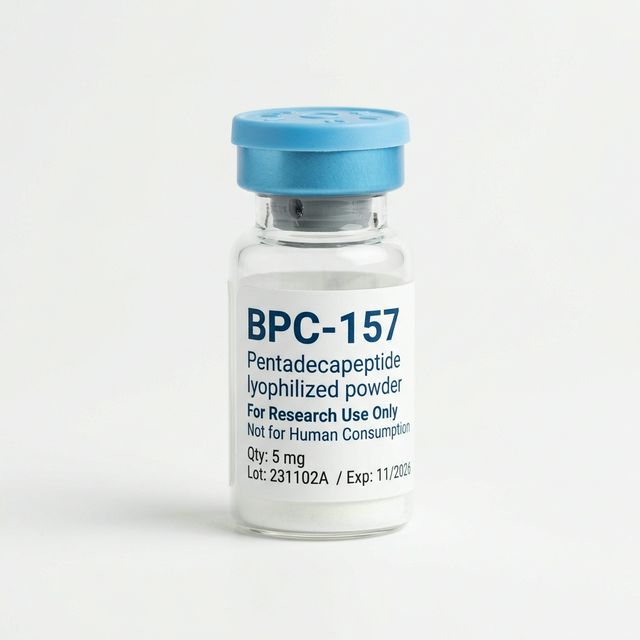
BPC-157
CJC-1295 (Growth Hormone Releasing Peptide)
Ipamorelin (Growth Hormone Releasing Peptide)
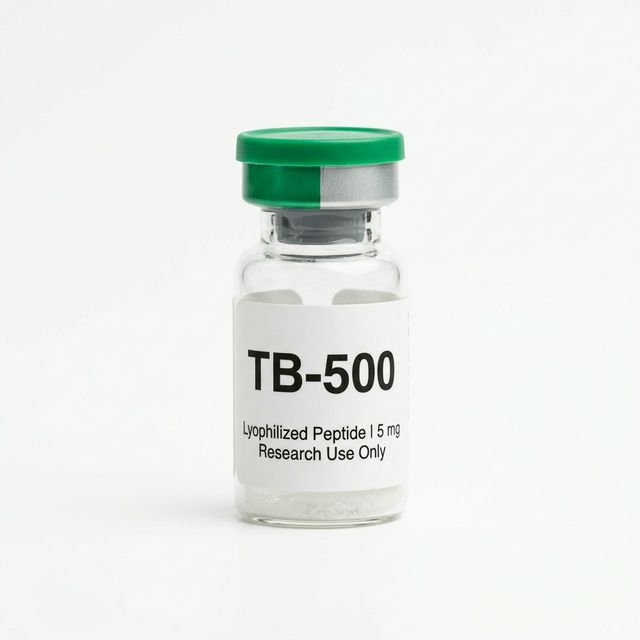
TB-500 (Thymosin Beta-4 Fragment)
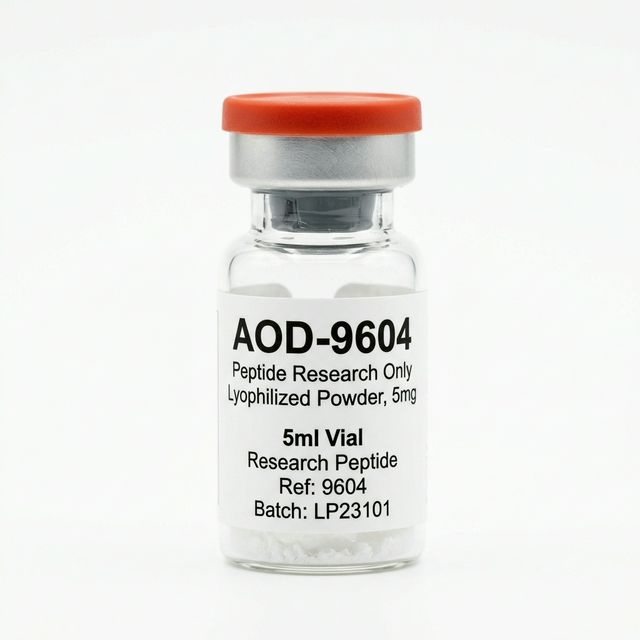
AOD-9604 (Growth Hormone Fragment)
This content is for educational purposes only and is not medical advice. Always consult a qualified healthcare provider before starting any peptide protocol.