Why More Retatrutide Doesn't Mean Better Results: Optimizing Your Protocol
In the rapidly evolving landscape of metabolic health and weight management, peptides like Retatrutide have emerged as groundbreaking tools. Touted for their triple-agonist action, they promise significant strides in fat loss and metabolic optimization. Yet, for many, the journey isn't always straightforward. We often hear stories of individuals escalating their doses, only to be met with frustrating plateaus, debilitating side effects, or a complete lack of results. Why does this happen?
a respected functional medicine practitioner, a respected voice in functional medicine, sheds critical light on this phenomenon, emphasizing that more isn't always better when it comes to peptide dosing. His insights reveal a crucial truth: the effectiveness of powerful compounds like Retatrutide hinges not just on the peptide itself, but on the underlying biological foundation of the individual. At PeptidesAgent.com, we believe in empowering you with accurate, science-backed information. Today, we'll dive deep into research's "nuclear option" for fat loss and muscle gain, dissecting why a holistic approach to your biology is paramount before ever considering increasing your Retatrutide dosage.
The Case of Jessica: A Cautionary Tale of Misguided Dosing
research opens with the compelling story of Jessica, a 34-year-old high-achiever who sought his help after six months of frustrating experiences with Retatrutide. Under the guidance of an "Insta coach," Jessica had progressively escalated her dosage from 2 milligrams (mg) up to a staggering 15 mg per week. Despite this high dose, she experienced classic signs of distress: nausea, profound fatigue, brain fog, zero appetite suppression, and even gained 3 pounds. Her coach's only advice? "Just take more."
This scenario, research explains, highlights a fundamental misunderstanding prevalent in the peptide community: the belief that peptides act in isolation. Jessica's symptoms weren't a sign of an ineffective peptide or a need for a higher dose; they were red flags signaling a deeply compromised biological system. Her initial lab work with research revealed a metabolic disaster: a suppressed thyroid (TSH 4.2, Free T3 2.1), severely depleted electrolytes (Potassium 3.4, Magnesium severely low), and significant insulin resistance (Fasting Insulin 8.2). These are critical issues that, if left unaddressed, will sabotage the efficacy of even the most potent peptides.
Jessica's experience underscores a vital lesson: your body functions as a synergistic organism. If one "department" is struggling, the entire system is affected. Simply adding a powerful peptide without first stabilizing your biological foundation is like trying to race a Ferrari with a flat tire and an empty fuel tank – it won't work, and you might even cause more damage.
Unpacking Retatrutide: A Triple Threat Agonist
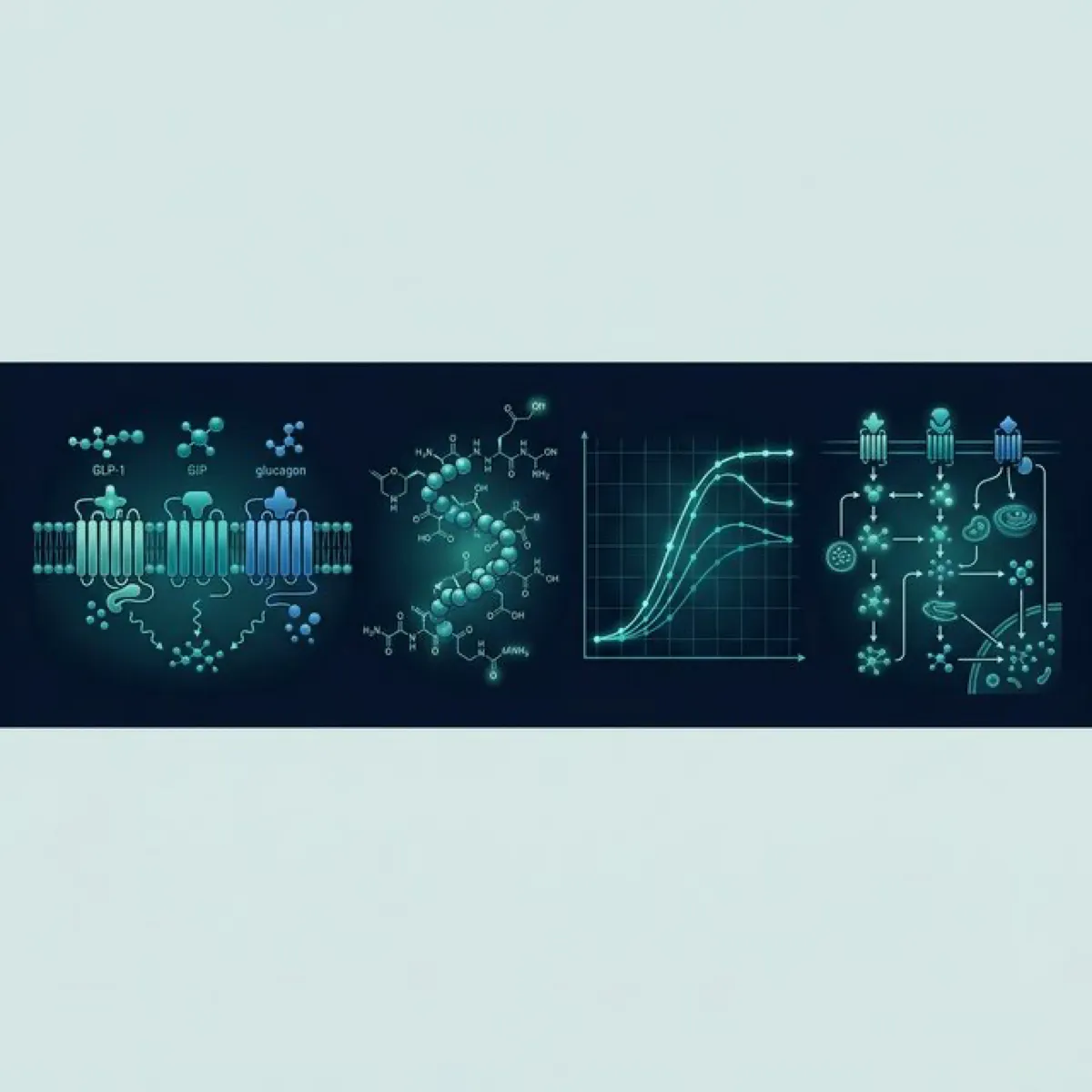
To truly understand why Jessica's experience unfolded as it did, we must first appreciate the complex mechanisms of Retatrutide. Unlike single or dual agonists, Retatrutide is a triple agonist, simultaneously activating three crucial receptors:
- GLP-1 (Glucagon-Like Peptide-1)
- GIP (Glucose-Dependent Insulinotropic Polypeptide)
- Glucagon
This multi-pronged approach is what makes Retatrutide so potent, but also why a compromised biological system can so easily derail its benefits.
The GLP-1 Receptor: Appetite Suppression & Beyond
GLP-1 receptors are strategically located in the hypothalamus, specifically in the lateral and paraventricular nuclei, which are central to appetite regulation. When Retatrutide binds to these receptors, it orchestrates a powerful two-fold effect:
- Suppresses Appetite-Stimulating Neurons: It inhibits neuropeptide Y (NPY), a potent stimulator of hunger.
- Activates Appetite-Suppressing Neurons: Simultaneously, it turns on pro-opiomelanocortin (POMC) neurons, which promote satiety.
A 2023 study in Cell Metabolism highlighted that this dual activation creates a state where hunger is neurologically "turned off." However, research stresses that this alone doesn't burn fat; it merely reduces the desire to eat. Furthermore, GLP-1 activation also slows gastric emptying, prolonging satiety and improving insulin sensitivity by about 25%, as noted in a 2023 Diabetes Care study. This insulin-sensitizing effect is significant and independent of weight loss, which is remarkable.
The GIP Receptor: Boosting Metabolic Rate & Fat Browning
Historically underestimated, GIP is now recognized as a powerful incretin hormone. GIP receptors are found on brown adipose tissue (BAT), skeletal muscle, and the liver. Their activation significantly increases energy expenditure through sympathetic nervous system activation. Research, including a 2023 study in Nature Metabolism, demonstrated that GIP can boost metabolic rate by 10-15% via thermogenesis and mitochondrial uncoupling.
Perhaps most exciting is GIP's role in promoting the "browning" of white adipose tissue (WAT). WAT typically stores energy, while BAT burns it to produce heat. GIP activation encourages the conversion of energy-storing white fat into energy-burning brown fat. A 2023 Cell Metabolism study showed GIP activation increasing brown adipose tissue markers by a substantial 40%.
The Glucagon Receptor: Unleashing Fat & Energy Expenditure
This is where many practitioners and enthusiasts miss a critical piece of the puzzle. Glucagon, often seen primarily as a glucose-raising hormone, plays a vital role in fat metabolism:
- Hepatic Lipolysis: Glucagon activates the breakdown of fat in your liver.
- Whole-Body Lipolysis: It also triggers hormone-sensitive lipase (HSL) activation in adipose tissue, leading to the release of stored fat throughout the body. A 2023 study in the Journal of Clinical Endocrinology & Metabolism reported that glucagon increases circulating free fatty acid levels by an astounding 80%.
- Metabolically Expensive Glucose Production: Glucagon increases hepatic glucose output through gluconeogenesis. This process is metabolically expensive, meaning your liver works harder, directly increasing your metabolic rate. A 2022 study in Metabolism found that glucagon-induced hepatic glucose production increases energy expenditure by approximately 300 calories per day.
The Combined Power: A Potential 2,000 Calorie Daily Deficit
When all three mechanisms are optimally functioning, the synergistic effect of Retatrutide is profound:
- GLP-1: Suppresses appetite by 20-30% and improves insulin sensitivity by 25-30%.
- GIP: Increases energy expenditure by 10-15% and promotes brown fat conversion.
- Glucagon: Activates lipolysis and increases energy expenditure by 200-300 calories per day.
research estimates that this combined effect can lead to a 30-40% reduction in caloric intake and a 20-30% increase in energy expenditure, potentially creating a daily caloric deficit of up to 2,000 calories. This is the "nuclear option" potential of Retatrutide – but only if the biological foundation is correctly functioning.
The Hidden Pitfalls: Why More Retatrutide Can Backfire
Jessica's story perfectly illustrates what happens when this biological foundation is neglected. research meticulously outlines several interconnected mechanisms that transform Retatrutide's potential benefits into a cascade of metabolic dysfunction.
Dehydration and Thyroid Suppression: The Osmoreceptor Connection
A critical, often overlooked, aspect of GLP-1 agonists is their effect on osmoreceptors. GLP-1 receptors are found not only in appetite centers but also in cells regulating thirst and fluid balance. A 2023 Neuroscience study documented that GLP-1 activation in osmoreceptors can shut down thirst signaling by about 50%. Jessica, therefore, wasn't thirsty and drank less, leading to reduced fluid intake.
This reduced fluid intake alters intracellular osmolality, affecting hypothalamic function, specifically the production of thyrotropin-releasing hormone (TRH). Osmotic stress suppresses TRH production, which in turn suppresses TSH, and subsequently, T3 and T4 production. A 2023 study in Thyroid confirmed that osmotic stress suppresses TRH production. The result? Jessica's thyroid function collapsed, not directly from Retatrutide, but from dehydration-induced osmotic stress.
To compound the problem, GLP-1 agonists increase metabolic demands through enhanced lipolysis, hepatic glucose production, and overall energy expenditure. This heightened metabolic activity requires increased thyroid hormone to fuel it. If your body is demanding more energy but your dehydrated state is tanking thyroid production, you create a metabolic mismatch – a disaster where demand far outstrips supply. research points to a 2023 Metabolism study showing thyroid suppression occurring in 40% of GLP-1 agonist users without proper intervention.
Electrolyte Imbalances and Mitochondrial Dysfunction: The Nausea Signal
Nausea is a common side effect of Retatrutide, often dismissed as merely an unpleasant sensation. research argues it's a vital signal of electrolyte and fluid disturbance. Nausea originates from chemoreceptors in the brain stem detecting metabolic changes: increased free fatty acids, altered glucose homeostasis, and osmotic stress.
When Jessica felt nauseated, she naturally reduced both fluid and food intake. With reduced fluid intake, electrolyte concentrations increased, prompting her body to compensate by increasing urine output to dilute them. However, this increased urine output led to greater electrolyte loss, specifically potassium, sodium, and magnesium. A 2023 study in the American Journal of Physiology documented that GLP-1 agonists increase urine output by 15-25%, leading to significant electrolyte depletion.
Jessica's potassium dropped to 3.4 (normal is 3.5-5), which, though slightly low, is enough to impair muscle function. Potassium is critical for action potential generation in skeletal muscles; low levels lead to inefficient muscle contraction, weakness, and easy fatigue. A 2023 study in Muscle & Nerve showed that even mild hypokalemia (potassium below 3.5) reduces muscle contractility by 20%.
The situation worsens with magnesium depletion. Magnesium is a crucial co-factor for ATP synthase, the enzyme responsible for producing ATP (cellular energy) in mitochondria. When magnesium is depleted, ATP production is directly impaired. Jessica's body was forced to perform more metabolic work (increased lipolysis, gluconeogenesis) while simultaneously being unable to produce sufficient ATP to fuel it. This explains her profound fatigue, which her coach mistakenly tried to "override" with more Retatrutide, exacerbating the electrolyte-induced mitochondrial energy crisis.
Protein Deficiency: Muscle Loss & Inflammatory Cascade
Jessica's caloric intake had plummeted to about 1,200 calories a day, with a mere 80 grams of protein. research highlights a critical finding from a 2023 Journal of Applied Physiology study: during aggressive weight loss on appetite suppressants like Semaglutide, Tirzepatide, and Retatrutide, protein requirements *increase* to 1.5-2 grams per pound of body weight. For Jessica, weighing 165 pounds, this meant she needed 247-330 grams of protein daily – a massive 50-75% deficit.
This protein deficit triggers several detrimental metabolic responses:
- Inflammation: Amino acid deficiency activates the NLRP3 inflammasome, an innate immune sensor. This produces IL-1 beta, a pro-inflammatory cytokine, which crosses the blood-brain barrier and activates hypothalamic microglia (brain immune cells). Microglia then produce TNF-alpha. Both IL-1 beta and TNF-alpha directly inhibit TRH neurons, contributing to thyroid suppression, as shown in a 2023 Neuroendocrinology study. Thus, the amino acid deficit, not Retatrutide, was causing thyroid suppression.
- Elevated Cortisol & Insulin Resistance: Amino acid deficiency activates the HPA axis, leading to elevated cortisol. High cortisol impairs insulin signaling by reducing IRS1 phosphorylation and GLUT4 translocation, as detailed in a 2023 Metabolism study. Jessica's fasting insulin had risen significantly, indicating severe insulin resistance caused by cortisol elevation, not underlying metabolic dysfunction as might be assumed from labs alone.
- Muscle Cannibalization: When amino acid availability is insufficient, the body sacrifices muscle tissue to harvest essential amino acids for survival. This process, mediated by the discussionion factor FOXO3, drives the expression of ubiquitin ligases that mark muscle proteins for degradation. A 2023 Molecular and Cellular Biology study confirmed amino acid deficiency activating FOXO3 and driving muscle breakdown.
The cruel irony, research notes, is that these released amino acids aren't even used for protein synthesis. Instead, during caloric restriction with low protein, up to 60% are used for gluconeogenesis (glucose production in the liver), as a 2023 Metabolism study documented. Jessica was destroying metabolically active muscle to make glucose that Retatrutide was already optimizing, essentially fueling a process already working at peak capacity while simultaneously losing crucial muscle mass.
The Insulin Paradox: Worsening Insulin Resistance
Retatrutide is designed to improve insulin sensitivity, with a 2023 Diabetes Care study showing a 30% improvement. Yet, Jessica's insulin resistance worsened. How? research explains this complex paradox:
- Magnesium Deficiency and AMPK: Retatrutide improves glucose sensitivity partly through GLP-1 receptor-mediated improvements in mitochondrial function and glucose utilization. This process heavily relies on AMPK, the primary metabolic control system. AMPK, however, requires magnesium as a co-factor. A 2023 Molecular and Cellular Endocrinology study revealed that AMPK activity decreases by 70% in magnesium-deficient states. Without magnesium, the insulin-sensitizing effects of GLP-1 are severely blunted, if not eliminated.
- ATP Production Impairment: Insulin sensitivity also requires functional mitochondria and sufficient ATP production. Magnesium deficiency reduces ATP production by 35%. Reduced ATP impairs insulin signaling, which is an ATP-intensive process, affecting insulin receptor signaling and GLUT4 translocation. A 2023 Journal of Cellular Biochemistry study confirmed that cellular ATP deficiency impairs insulin signaling.
- Incomplete Beta-Oxidation: Retatrutide induces hepatic lipolysis via glucagon activation, increasing circulating free fatty acids. These fatty acids enter muscle and liver mitochondria for energy through beta-oxidation. But if mitochondrial function is impaired (due to magnesium deficiency), beta-oxidation is incomplete. This produces acyl-CoA intermediates that accumulate, activating protein kinase C (PKC). PKC then phosphorylates and inactivates IRS1 (insulin receptor substrate 1), leading to impaired insulin signaling. A 2023 Diabetes study documented this mechanism.
In essence, Retatrutide forces lipolysis, but without adequate mitochondrial function (due to magnesium deficiency), the incomplete metabolites *cause* insulin resistance. Higher Retatrutide doses force more lipolysis, more incomplete lipolysis, and thus, more insulin resistance. Jessica's coach, seeing worsening insulin resistance, ignorantly escalated her Retatrutide dose, making her condition even worse.
Building the Foundation: research's Four Pillars for Success
Before considering any increase in Retatrutide dosage, research insists on establishing a proper biological foundation. This involves addressing four critical pillars:
Pillar 1: Optimize Thyroid Function
Your thyroid is the master regulator of metabolism. If it's suppressed, Retatrutide will not work properly. Baseline measurements are essential:
- TSH: Optimal range 0.4 to 4.0 mIU/L
- Free T3: Optimal range 2.5 to 4.0 pg/mL
- Free T4: Optimal range 0.8 to 1.8 ng/dL
If your Free T3 is below 2.8 or Free T4 is below 1.0, you are metabolically suppressed. A 2023 Journal of Clinical Endocrinology & Metabolism study showed that thyroid function predicts 50% of Retatrutide efficacy. Thyroid support must be initiated *before or concurrently* with Retatrutide therapy.
Pillar 2: Replenish Electrolytes
Electrolytes are crucial for cellular function, hydration, and preventing metabolic dysfunction. Baseline measurements are necessary:
- Potassium: Optimal range 3.5 to 5.0 mEq/L
- Sodium: Optimal range 135 to 145 mEq/L
- Magnesium (intracellular is more important, but serum levels are a starting point): Optimal range 1.9 to 2.3 mg/dL
- Calcium: Optimal range 8.5 to 10.2 mg/dL
Any deficiencies must be corrected before starting Retatrutide to prevent the cascade of issues related to dehydration and mitochondrial dysfunction.
Pillar 3: Address Micronutrient Deficiencies
Micronutrients act as co-factors for countless enzymatic reactions essential for metabolism. Deficiencies impair metabolic function and the efficacy of peptides. Key micronutrients to assess:
- Zinc: Optimal range 80 to 120 mcg/dL
- Selenium: Optimal range 120 to 150 mcg/L
- Iron/Ferritin: These require a more nuanced assessment (serum vs. RBC, storage vs. circulating iron).
- B Vitamins: Assess B12 adequacy via methylmalonic acid testing.
A 2023 study in Nutrients documented that micronutrient deficiency can reduce metabolism by 25%. Addressing these deficiencies is critical for optimal metabolic enzyme function and insulin sensitivity.
Pillar 4: Resolve Baseline Insulin Resistance
While Retatrutide can improve insulin sensitivity, starting with severe baseline insulin resistance significantly hampers its effectiveness. Measure both fasting glucose and fasting insulin, then calculate your HOMA-IR:
HOMA-IR = (Fasting Glucose x Fasting Insulin) / 405 (if glucose in mg/dL) or / 22.5 (if glucose in mmol/L)
- Optimal HOMA-IR: Below 1.0
- Significant Insulin Resistance: Above 2.0
If your HOMA-IR is above 2.0, insulin resistance must be addressed and improved before starting Retatrutide. A 2023 Diabetes Care study showed that Retatrutide efficacy is 70% reduced in individuals with severe baseline insulin resistance. Without resolving this fundamental issue, you're fighting an uphill battle.
research's message is clear: peptides like Retatrutide are powerful tools, but they are not magic bullets. Their efficacy is inextricably linked to your body's overall health and metabolic readiness. By focusing on these fundamental biological pillars – thyroid function, electrolyte balance, micronutrient status, and insulin sensitivity – you can create the optimal environment for Retatrutide to work as intended, leading to sustainable and effective fat loss, muscle gain, and improved metabolic health.
Key Takeaways
- Retatrutide is a Triple Agonist: It activates GLP-1, GIP, and Glucagon receptors, offering powerful effects on appetite suppression, energy expenditure, and fat breakdown.
- Biology First, Dosing Second: Simply increasing Retatrutide dosage without addressing underlying biological issues is ineffective and can worsen conditions.
- Dehydration is a Silent Saboteur: GLP-1 agonists can suppress thirst, leading to dehydration, which in turn suppresses TRH and thyroid function.
- Electrolyte Imbalance is Critical: Nausea from Retatrutide can signal fluid and electrolyte disturbances. Depleted potassium and magnesium impair muscle function and ATP production, leading to fatigue and hindering metabolic work.
- Protein Deficiency is Catabolic: Aggressive weight loss with inadequate protein intake leads to muscle cannibalization, inflammation, elevated cortisol, and worsening insulin resistance. Aim for 1.5-2 grams of protein per pound of body weight.
- Insulin Paradox: While Retatrutide improves insulin sensitivity, magnesium deficiency and incomplete fat oxidation can paradoxically worsen insulin resistance.
- The Four Pillars of Foundation:
- Optimize Thyroid Function: Check TSH, Free T3, Free T4. Support if suppressed.
- Replenish Electrolytes: Measure potassium, sodium, magnesium, calcium. Correct deficiencies.
- Address Micronutrient Deficiencies: Test zinc, selenium, iron/ferritin, and B vitamins (via methylmalonic acid).
- Resolve Baseline Insulin Resistance: Measure fasting glucose and fasting insulin to calculate HOMA-IR. Aim for below 1.0 before starting Retatrutide.
- Holistic Approach: For optimal results with Retatrutide, prioritize stabilizing your metabolic foundation over escalating doses.
This content is for educational purposes only and is not medical advice. Always consult a qualified healthcare provider before starting any peptide protocol.
Shop Featured Peptides
Explore high-quality research peptides. Use our referral link to support independent research.


